Reconfirm 24–48 Hours: Staging Areas by Trade for Contractors
O'Leary Development GroupSeptember 18, 2026
Contractors: Stage materials by trade, run a 5 minute pre delivery walk, reconfirm deliveries 24–48 hours ahead, and protect stockpiles.
San Antonio’s Go-To Material Supplier
Get a Free Per-Load Quote Today
Same-day delivery available · Transparent pricing · Licensed & insured
Stage materials as close to the installation zone as your site allows, but keep the spot clear of active work lanes and well away from drainage inlets. The three factors that decide the location are truck access and turning radius, ground bearing capacity, and stormwater protection. Before anything else, confirm the delivery route and reserve your slot with the supplier.
TL;DR:
Confirm truck access by testing turning radii and ground bearing capacity before scheduling deliveries to prevent delays and site damage.
Assign a single trained person to inspect and sign for deliveries on-site, capturing photos of the material before the truck departs to avoid disputes.
Organize materials into clearly marked zones by trade and phase to reduce double-handling, congestion, and labor waste.
Protect stockpiles immediately with barriers or covers and inspect weekly, especially if they remain unused beyond two weeks, to prevent erosion and sediment runoff.
Use a logistics provider with GPS-tracked trucks and coordinated scheduling to ensure delivery windows match your project’s lookahead plan and site conditions.
Olearydevelopmentgroup
Keep Material Deliveries Moving
O’Leary Development Group delivers bulk materials across San Antonio and surrounding cities for construction, landscaping, and industrial projects.
Quick Checklist Before Every Delivery to Your Staging Area
A five-minute pre-delivery walk catches most of the problems that turn a routine drop into a stuck truck or a blocked driveway. A pre-delivery site assessment that checks the route, overhead clearances, and soft ground prevents failed deliveries before the truck ever leaves the yard.
Run through this list every time, not just for the first load of the week:
Walk the truck route from the street to the staging area, noting any tight turns, low branches, or soft shoulders.
Confirm gate hours and any overhead clearance restrictions, especially on sites with power lines or scaffolding.
Verify the turning radius and parking footprint match the vehicle class the supplier plans to send.
Name a designated receiver for the delivery and confirm they will be on-site at the scheduled time.
Agree on the documentation process, whether that is a signed packing slip, a timestamped photo, or both.
Make sure the unloading crew or equipment operator is available the moment the truck arrives.
Skipping step four is the most common miss. A truck that shows up with nobody assigned to receive it either idles at your expense or dumps the load wherever the driver thinks is safe, which is rarely where you wanted it.
How Do You Check Access and Ground Conditions First?
Start with the path, not the pile. A dump truck or trailer that can’t turn into your lot will either scrape a fence, block the street, or leave the load somewhere inconvenient. Confirm the gate width and turning path before you confirm anything else.
As a rule of thumb, a large trailer typically needs a wide outside turning radius appropriate for its size, though you should always confirm the exact vehicle class with your supplier rather than assume. Once the truck can physically get there, the ground has to hold it.
Test soil bearing capacity in the staging spot, especially after rain, since saturated clay or loose fill can swallow a tire in minutes.
Build a compacted crushed aggregate pad, crane mats, or a 6-inch compacted base where native soil is questionable.
Lay plywood or matting as a temporary lane if you only need the surface for a few deliveries.
Plan crane or forklift access separately if the materials require mechanical unloading rather than a direct dump.
Guidance from the Mile High Flood District recommends aggregate at roughly 3 inches in diameter for stabilized staging surfaces, since anything smaller tends to work its way into soft subgrade under repeated truck traffic.
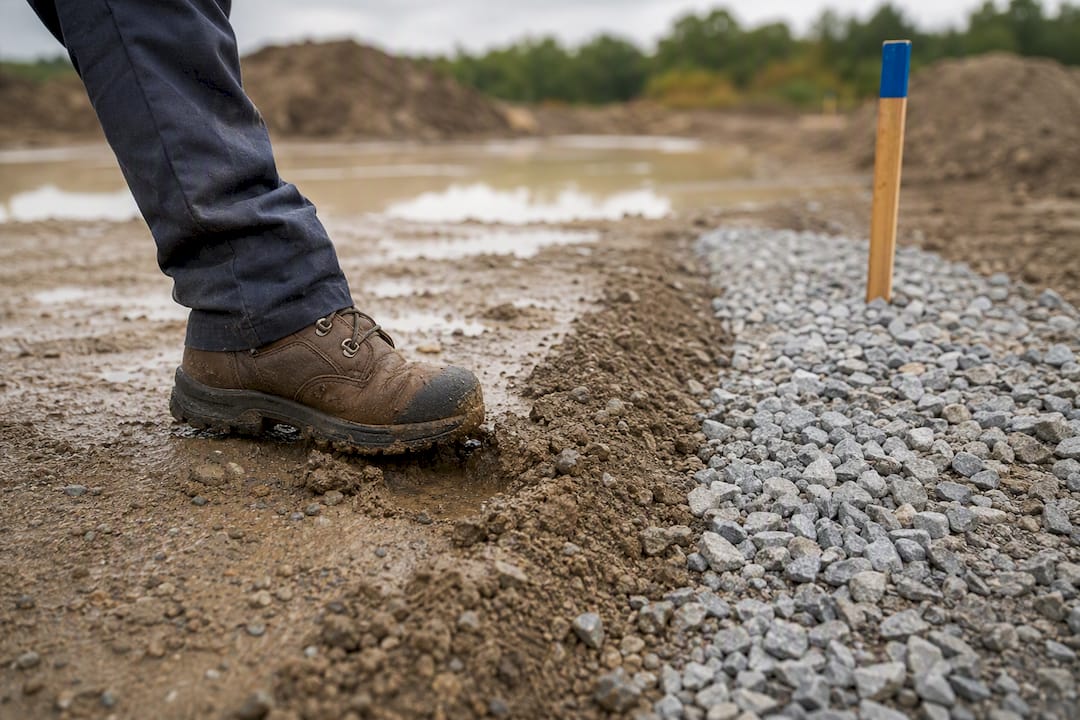
Pro Tip:Walk the staging pad yourself in work boots after a heavy rain. If your heel sinks, a 12,000-pound dump truck will too.
Organize Staging Zones by Trade to Avoid Double-Handling
Materials that land in the wrong spot get moved twice, which costs labor hours you never budgeted for. Map out staging zones on your site layout and assign each one to a specific trade or phase, whether that’s framing, mechanical, finishes, or landscaping. Procore’s construction logistics guidance treats this zone mapping as a core part of any workable logistics plan, precisely because unlabeled staging invites materials to pile up wherever there’s open ground.
Ready to Order?
Call Now: 210-983-8005
Same-day delivery available on most orders in San Antonio and surrounding cities
Mark each zone clearly with flagging, paint, or signage so drivers and crews know where each material belongs without asking.
Keep the critical path clear. Never let a staging pile block the area your framing or concrete crew needs next week.
Rotate zones as phases finish, freeing up ground for the next trade’s deliveries instead of stacking new material on top of old.
On landscaping jobs, keep topsoil and mulch separate from stone and gravel zones to avoid cross-contamination during placement.
Separating materials by trade also reduces labor waste tied to hauling the same pile across the site more than once, a point Redwood Logistics makes in its own site logistics planning research. If your lot is genuinely too tight for on-site storage, don’t force it. Off-site staging with shuttle runs, or a just-in-time delivery timed to the exact hour of installation, often works out cheaper than fighting for space you don’t have.
When Do You Need to Cover a Stockpile?
Any stockpile you won’t use soon needs protection the moment it’s placed, according to erosion control guidance from CASQA. That threshold isn’t arbitrary. Uncovered fill dirt, sand, or mulch left exposed through even a moderate storm can wash sediment straight into a storm drain, and cleanup after the fact costs far more than a roll of silt fence would have.
Ring the pile with silt fence, compost berms, fiber rolls, or sand and gravel bags depending on the material and slope.
Cover bagged or bulk material with plastic sheeting when rain is forecast, and stack bagged goods on pallets to keep them off wet ground.
Keep stockpiles at a recommended safe distance from concentrated stormwater flows and drainage inlets where the site allows it, per Stanislaus County’s stockpile guidance.
Inspect every barrier and cover weekly, before any forecasted rain, and again immediately after a storm event.
14-day rule: stockpiles idle past two weeks without active use require protective controls in place, not just planned. Waiting until the forecast looks bad is already too late for most inspection schedules.
Who Signs Off When the Delivery Truck Arrives?
Assign one person, and only one, to direct the driver and sign for the load. When two people on-site both think they’re in charge of the delivery, quantity disputes and misplaced piles follow almost every time. That single point of contact inspects the load against the packing slip while the truck is still there, because disputes get much harder to resolve once the driver has left the site.
Count and inspect the material against the packing slip before the driver pulls away, not after.
Photograph the pile and any visible damage or shortfall as part of the sign-off record.
Set out cones, flaggers, or barriers to keep pedestrian routes separated from the truck’s backing and dumping path.
Never let a staged load or an idling truck block a fire lane or emergency access route, even temporarily.
The same separation principle applies across any active work zone with vehicle traffic, a point echoed in truck driver safety guidance for construction zones: keep delivery movement physically apart from foot traffic wherever possible.
Pro Tip:Have your receiver take one photo of the packing slip and one of the pile before the truck leaves. That single habit resolves more billing disputes than any phone call afterward.
Should You Schedule Deliveries Around the Lookahead?
Pull every delivery date from your current lookahead schedule, tied to the specific task and crew that need the material, not just the date on the purchase order. A PO date tells you when a supplier planned to ship. It says nothing about whether your framing crew will actually be ready for that lumber on that day.
Check your 2 to 3 week lookahead before confirming any delivery window with a supplier.
Reconfirm the delivery slot, along with route access and vehicle class, 24 to 48 hours before the truck is due to arrive, a practice Veyor Digital points to as one of the more reliable ways to avoid queuing and demurrage charges.
Ask the supplier to confirm the vehicle class in that same reconfirmation call, especially if access is tight.
If your site can’t absorb the load early, shift to just-in-time delivery or an off-site laydown yard with shuttle runs instead.
Build in a contingency plan, a backup delivery window or an alternate staging spot, for the inevitable weather delay or traffic jam.
Field Perspective: What Actually Goes Wrong on Site
The mistakes repeat across almost every job: no one assigned to receive the truck, staging placed right where water wants to run, and nobody bothering to reconfirm the delivery window until the truck is already ten minutes out. None of these are complicated fixes. Mark a 15 to 30 minute unloading zone near the access point. Lay a temporary gravel pad before the first load, not after the second truck gets stuck. Require a photo of the pile before the driver signs off and leaves.
None of this requires new equipment or a bigger budget, just a checklist someone actually follows. Teams that want a ready-made version can build from O’Leary’s own construction site logistics playbook rather than reinventing one mid-project.
— BRIAN
Schedule Delivery in Minutes
Get Your Free Quote Today
Tell us your location, access, and estimated yardage — we’ll handle the rest
Let O’Leary Development Group Handle the Staging and the Delivery
A single service provider with GPS-tracked trucks offers same-day or next-day dispatch designed to align with your actual schedule, replacing the need to juggle multiple suppliers and uncertain delivery windows.
Whether you need fill dirt, gravel, sand, or topsoil delivered, Olearydevelopmentgroup’s online booking system lets you reserve a slot without a string of phone calls, and contractor accounts with net-30 invoicing keep the paperwork out of your way. Every truck runs licensed and insured, and the dispatch scheduling supports the same lookahead-based coordination this article just walked through, so your staging plan and your delivery window actually match up. If demolition debris or old material needs to leave the site before the new load arrives, the haul-off service clears that ground first.
Ready to lock in a delivery window that fits your lookahead instead of fighting it? Request a quote and walk through your site staging plan with O’Leary’s team before the next load ships.
Check your local NPDES permit and municipal stormwater rules before finalizing any stockpile or staging plan, since setback and inspection requirements vary by jurisdiction.
FAQ
What Is the 14-Day Rule for Stockpiles?
Any stockpile not scheduled for use within 14 days needs protective controls, such as silt fence, compost berms, or plastic covers, in place immediately, per CASQA guidance.
Who Signs the Delivery Receipt On-Site?
One designated receiver should inspect and sign for the load while the driver is still present, since disputes over quantity or quality are far harder to resolve after the truck leaves.
How Do You Stage Materials on a Tight Urban Lot?
When space is limited, shift to off-site laydown with shuttle runs or just-in-time delivery timed to installation, rather than forcing a full stockpile onto a lot that can’t hold it.
What’s the Minimum Ground Prep for a Staging Area?
At minimum, compact the native soil and add a stabilized surface, such as 3-inch aggregate, crane mats, or a 6-inch compacted base, wherever soil testing shows soft or saturated ground.
Does O’Leary Development Group Help Coordinate Staging and Delivery Timing?
Yes. Olearydevelopmentgroup offers same-day and next-day dispatch with GPS-tracked trucks and contractor scheduling support, so delivery windows can align with your site’s lookahead plan.