San Antonio Contractors: Same Day Dust Control Aggregate Delivery
O'Leary Development GroupSeptember 20, 2026
San Antonio contractors: choose crusher run or crusher fines with 8–15% fines, require damp, tarped delivery, and compact while moist for durable dust...
San Antonio’s Go-To Material Supplier
Get a Free Per-Load Quote Today
Same-day delivery available · Transparent pricing · Licensed & insured
For durable dust reduction, specify a well-graded, compactible aggregate, either crusher run, road base, or crusher fines, delivered moist and locked in with proper spreading and compaction. Fines content and moisture at delivery decide whether a surface holds up or blows away. Reach for a dust suppressant only after the aggregate itself is right, or when the site’s traffic and climate demand extra help.
TL;DR:
Crusher run or crusher fines with 8 to 15% fines provide the best natural dust control when properly compacted and kept moist during installation.
Washed gravel is ineffective for dust control unless blended with a fines-rich base due to the absence of binding fines.
Accurate specification of gradation, moisture, and source material at delivery ensures aggregate performs as expected and minimizes fines loss.
Proper staging, quick spreading, and compacting within a short window prevent fines from drying out and becoming airborne.
Dust suppressants extend durability but are most effective when applied to well-graded, moist, and properly compacted aggregate surfaces.
Olearydevelopmentgroup
Get Aggregate Delivered To Your Site
O’Leary Development Group delivers bulk materials across San Antonio and surrounding cities for construction, landscaping, and industrial projects.
Which Dust Control Aggregate Materials Actually Cut Dust?
Not every gravel product controls dust the same way. The material’s ability to bind together under compaction determines whether it sheds fine particles into the air or locks them into a stable crust.
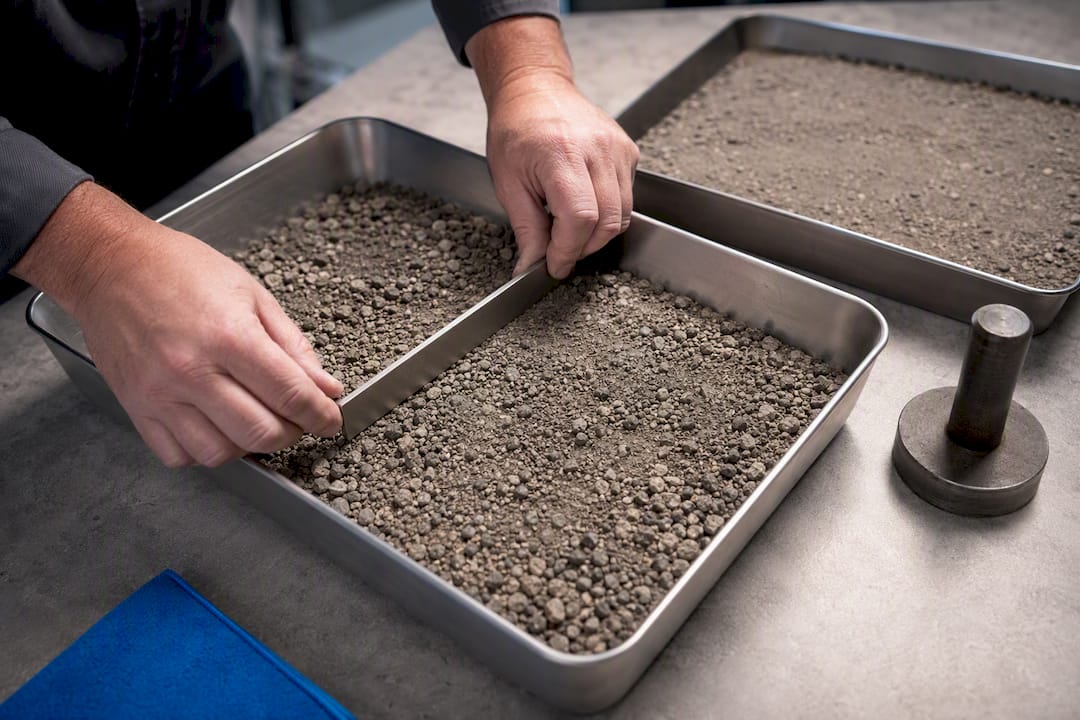
Crusher run (sometimes labeled road base or ABC) is mechanically crushed rock with a continuous gradation, everything from coarse rock down to rock dust in one product. That full range of particle sizes is exactly why it compacts into a dense, interlocking layer instead of a loose pile. According to a crusher run specs and cost guide, this graded mix is the preferred choice for structural road base and wearing surfaces where stability and dust control both matter.
Crusher fines, the finer crushed byproduct, work well as a top layer over compacted road base or as a standalone surface on lighter-traffic paths and yards. They bind tightly when moist but need periodic replenishment since the fine particles are the first to erode under traffic.
Washed and crushed gravel sits in a different category. Washing strips out the fine particles that would otherwise act as a binder, so this material drains well and looks clean but does little for dust unless it is blended with a fines-rich base first. If dust control is the primary goal, skip straight washed stone as the top layer.
Key specification points to keep in mind:
Target roughly 8 to 15% fines by weight (material passing the No. 200 sieve) so the aggregate acts as its own binder, per PennDOT’s LTAP TechSheet TS-187.
Favor crushed, fractured stone over rounded material. Fractured faces interlock; rounded pea gravel simply shifts underfoot and never seals.
Harder source rock resists breaking down into loose dust under repeated loading, a factor tied to abrasion resistance testing that most quarries can report on request.
Watch sand equivalency. Very sandy gravels tend to respond poorly to both compaction and any suppressant applied later.
If your project calls for a decorative or low-traffic surface instead, pea gravel has its place, just not as a dust-control wearing course.
What Should You Ask For When Ordering Aggregate?
A delivery ticket that only says “gravel” leaves too much room for the wrong material to show up. Treat the order like a spec sheet, not a phone call.
Ready to Order?
Call Now: 210-983-8005
Same-day delivery available on most orders in San Antonio and surrounding cities
Request the gradation report. Ask your supplier for the sieve analysis and confirm the percent passing the No. 200 sieve falls in the 8 to 15% fines range for a dust-control application.
Specify crushed, fractured stone, and ask the supplier to confirm the source material is free of clay clumps, organic matter, or debris.
Confirm delivery moisture. Material should arrive damp, not bone dry and not saturated, and loads should be tarped in transit to prevent fines from blowing off the truck.
Clarify units and minimums. Contractors get burned when a quote assumes tons but the invoice bills cubic yards; nail down the conversion and any minimum load size before the truck rolls.
Lock in scheduling and staging. Confirm the delivery window and where trucks will stage on site so material isn’t left waiting in the sun and drying out before it’s spread.
Once the load arrives, a few field checks catch problems before they’re compacted into the ground. Grab a handful and squeeze it: it should hold a loose ball, not crumble to powder or drip water. A quick visual scan should show a mix of particle sizes, not uniform pea-sized rock. If you run quality control on bigger jobs, a hydrometer or pH kit can confirm fines content and flag contamination.
Pro Tip:Write the fines percentage and moisture requirement directly on the purchase order, not just in a phone conversation. It gives you a paper trail if a load shows up out of spec, and it keeps the supplier accountable to the same number every time you order.
How Do You Place and Compact Aggregate to Prevent Dust?
The best material on earth still turns to dust if it’s dumped in a pile and left to dry before anyone spreads it. Installation technique matters almost as much as material selection.
Keep staging time short. Moisture starts evaporating the moment the tailgate drops, and every hour of delay works against you.
Use a spreader box or paver where the job justifies it. Tailgate dumping causes segregation, with coarse rock rolling to the edges and fines settling in the middle, which undermines the even gradation you paid for.
Compact while the material is still moist. That narrow window is when fines lock into the voids between larger particles and form the crust that resists dust.
Run enough roller passes to reach a dense, tight surface, then shape the crown so water sheds instead of pooling and washing fines out later.
A motor grader earns its keep here too, working the crown and drainage profile before final compaction rather than after. Skipping that step is how otherwise good aggregate ends up with standing water and soft spots within a month. Contractors handling grading and compaction on the same job often lean on a concrete contractor’s site prep expertise to keep the sequencing tight between spreading and rolling.
When Do You Need a Dust Suppressant, and Which Type?
Suppressants are a supplement, not a substitute. If the underlying aggregate lacks fines or was placed dry, no chemical treatment will fully make up for it. But once the material and compaction are right, a suppressant extends performance through heavy traffic or dry seasons.
The main categories, with their trade-offs:
Chlorides (calcium chloride, magnesium chloride) draw moisture from the air and keep the surface damp longer, but they accelerate corrosion on equipment and vehicles nearby.
Lignosulfonates, a byproduct of paper processing, bind fines with less corrosion risk, though performance drops off faster in heavy rain.
Oils and asphalt emulsions offer longer-lasting binding but carry environmental runoff concerns near waterways.
Polymers bind well and resist water better than lignosulfonates, generally at a higher material cost per treated area.
Field data point: Studies on gravel road treatments found that surface moisture content was the single best predictor of how well a suppressant performed, and treatment life ran up to roughly 100 to 200 days depending on traffic and weather, according to the Minnesota LRRB dust control report.
Suppressants also perform worse on sandy, low-fines gravels, per the same LRRB research, which is one more reason to fix the aggregate first and treat second. Chlorides in particular deserve caution near steel culverts, parked equipment, or storm drains, the same environmental scrutiny that applies to any concentrated chemical application on a job site, per EPA gravel road guidance.
How Long Does Dust Control Aggregate Last?
Expect a well-built aggregate surface to hold up for one to several seasons before it needs blading or fresh material, though heavy truck traffic and freeze-thaw cycles shorten that window fast. Winter plowing in particular strips away treated surface layers and exposed fines, often cutting service life well below what a dry-climate site would see.
Routine upkeep that extends performance:
Blade the surface periodically to redistribute fines and knock down ruts before they widen.
Spot-replace aggregate in high-wear zones like turnarounds and gate entries rather than waiting for the whole surface to fail.
Reshape the crown and drainage ditches; standing water is what washes fines out fastest.
Reapply suppressant on the cadence the product and traffic level call for, rather than a fixed calendar date.
When a surface keeps losing fines no matter how often it’s treated, that’s usually a sign the original material was deficient, not that the suppressant failed. Hauling in fresh, well-graded crusher run at that point tends to cost less over a year than repeated chemical applications on a surface that can’t hold them.
Practical Lessons From Bulk-Delivery Operations
Clear specs and fast, tarped delivery matter more than any product name on the invoice. The biggest fines losses happen in the gap between drop-off and spreading, so tight staging and short wait times protect your gradation better than anything applied afterward. Get the delivery right and the rest of the job gets a lot easier.
Schedule Delivery in Minutes
Get Your Free Quote Today
Tell us your location, access, and estimated yardage — we’ll handle the rest
— BRIAN
Getting Dust Control Aggregate Delivered Without the Guesswork
Getting the right gradation and moisture on site starts with who’s hauling it. A reputable supplier delivers road base, crusher fines, and washed and crushed gravel with tarped, GPS-tracked trucks and transparent per-load pricing, so what shows up on your site matches what you specified, not a compromise the yard had sitting around.
Contractors managing multiple deliveries a week benefit from the online booking system and contractor account features, including net-30 invoicing, that keep scheduling and staging predictable instead of reactive. Same-day and next-day dispatch across San Antonio and the surrounding area means you’re not left waiting on a load while a crew stands idle. Whether you need a single haul of road base for a driveway or ongoing aggregate hauling for a longer project, the process starts the same way: request a quote and lock in a delivery window that fits your compaction schedule. Head to the shop page to get pricing and book your next load.
What Is the Best Dust Control Aggregate for a Driveway?
Crusher run or road base is generally the best choice because its full range of particle sizes, including 8 to 15% fines, compacts into a tight, interlocking surface per PennDOT’s gradation guidance. Crusher fines work well as a top dressing over that base on lower-traffic paths.
Does Pea Gravel Control Dust?
Pea gravel is rounded and lacks the fines content needed to bind together, so it does little to reduce dust and tends to shift underfoot. It’s better suited to decorative or drainage applications than dust-control wearing surfaces.
How Long Do Dust Suppressants Last on Gravel Roads?
Field studies found treatment life typically runs up to about 100 to 200 days depending on traffic, moisture, and weather, according to the Minnesota LRRB study. Heavy winter plowing and high traffic volume shorten that window considerably.
Can I Order Dust Control Aggregate for Same-Day Delivery?
Olearydevelopmentgroup offers same-day and next-day dispatch for road base, crusher fines, and other bulk aggregates across the San Antonio area. Current pricing and load minimums are listed on the shop page.
Do I Need a Dust Suppressant If I Use Good Aggregate?
Not always. If your aggregate has the right fines content, is delivered moist, and is properly compacted, it may hold up well without any chemical treatment. Suppressants become worthwhile mainly for heavy traffic, dry climates, or surfaces already deficient in fines.