Concrete Foundations for Multifamily Apartments: Systems, Construction Methods & Key Considerations in San Antonio
O'Leary Development GroupSeptember 4, 2026
Concrete Foundations for Multifamily Apartments: Systems, Construction Methods & Key Considerations in San Antonio ## Table of Contents - [Structural Engineering Options for Concrete Foundations and Multifamily Apartments](#structural-engineering-options) - [Overcoming…
San Antonio’s Go-To Material Supplier
Get a Free Per-Load Quote Today
Same-day delivery available · Transparent pricing · Licensed & insured
Concrete Foundations for Multifamily Apartments: Systems, Construction Methods & Key Considerations in San Antonio
## Table of Contents
– [Structural Engineering Options for Concrete Foundations and Multifamily Apartments](#structural-engineering-options)
– [Overcoming Central Texas Soil Challenges in Apartment Foundation Design](#central-texas-soil-challenges)
– [Hauling and Logistics Planning for Concrete Foundations and Multifamily Apartments](#hauling-logistics-planning)
– [Dispatch Synchronization: Aggregate Hauling and Continuous Concrete Pours](#dispatch-synchronization)
– [Permitting, Route Compliance, and Traffic Management in San Antonio](#permitting-route-compliance)
– [Jobsite Traffic Management and Staging for High-Density Developments](#jobsite-traffic-management)
– [Frequently Asked Questions](#frequently-asked-questions)
San Antonio’s residential construction sector accounted for $4.1 billion in starts, with multifamily projects representing $1.2 billion in total project valuation. As Central Texas addresses an estimated housing shortage of over 25,000 units, developers are fast-tracking high-density apartment communities across Bexar and Comal counties. Behind every successful multifamily project stands a critical foundation phase where engineering precision meets logistics execution. For contractors and project managers, understanding how **multifamily concrete foundations** interact with local soil conditions, structural systems, and aggregate hauling operations determines whether your timeline holds or your budget expands.
Multifamily apartment foundation construction in San Antonio requires more than engineered drawings and concrete specifications. It demands coordination between structural engineers who design systems capable of handling highly expansive clays, ready-mix suppliers delivering continuous pours, and dump truck fleets moving thousands of cubic yards of base material on tight schedules. When any component fails—a delayed aggregate delivery, an undersized haul fleet, or poor jobsite traffic flow—cold joints form, inspections stall, and framing crews sit idle.
This guide examines the structural, geotechnical, and logistical realities of building apartment foundations in Central Texas. Whether you’re managing a 200-unit garden-style development in New Braunfels or a mid-rise project along San Antonio’s I-10 corridor, you’ll learn how post-tensioned slabs, mat foundations, and deep pier systems address local soil movement, and why reliable aggregate hauling isn’t just a support service—it’s the backbone of your construction schedule.
Structural Engineering Options for Concrete Foundations and Multifamily Apartments
Choosing the right foundation system for multifamily apartment construction in Central Texas starts with understanding soil behavior, building loads, and long-term performance expectations. Three primary structural approaches dominate regional apartment foundation design: post-tensioned slab-on-grade systems, mat foundations, and deep pier structural systems. Each offers distinct advantages depending on soil conditions, building height, and project budgets.
### Post-Tensioned Slab-On-Grade Foundations
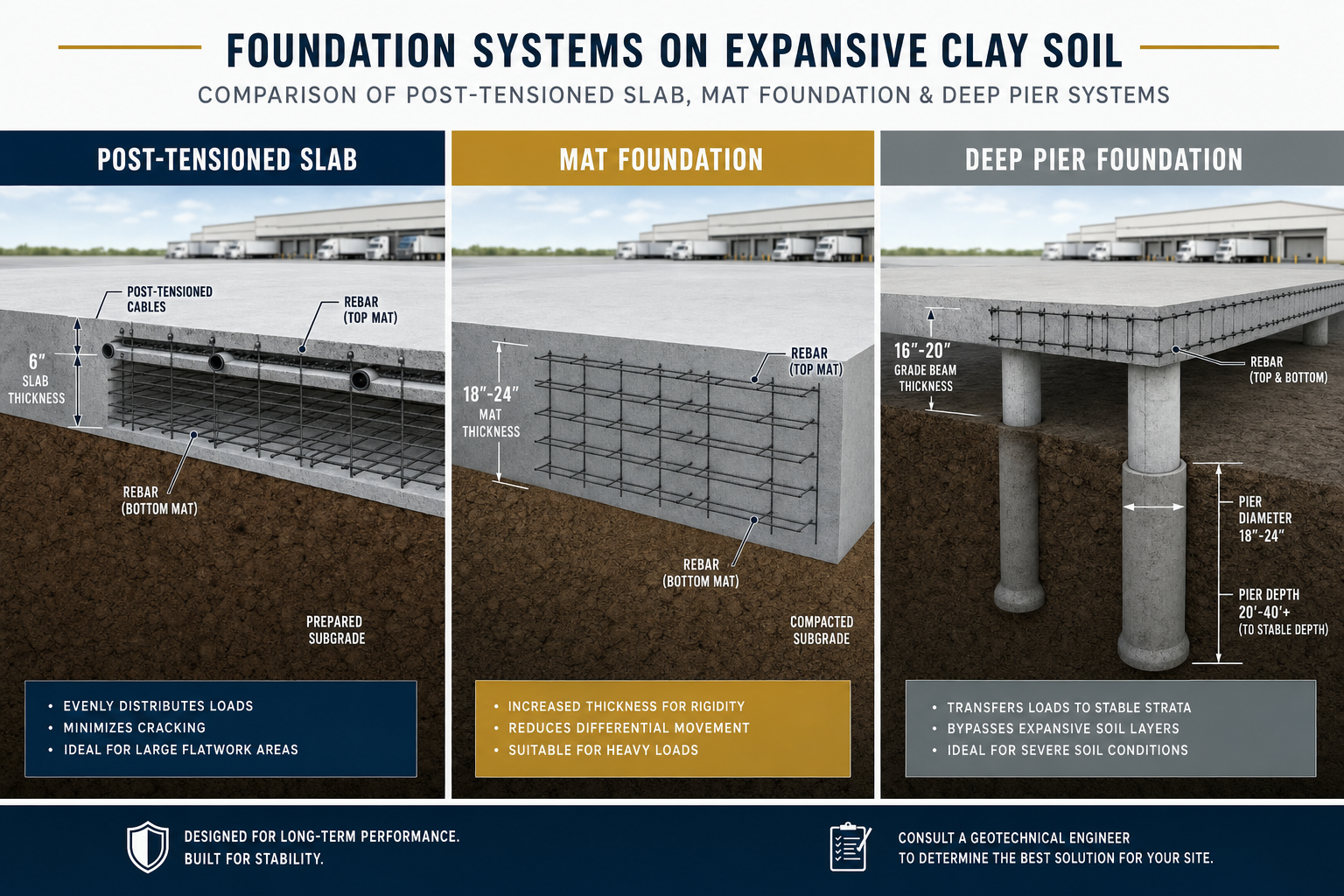
Post-tensioned (PT) slab-on-grade systems remain the most common **apartment foundation construction** method for low-rise and garden-style multifamily developments in San Antonio. These foundations use high-strength steel cables tensioned after concrete curing to create a monolithic slab that resists differential movement caused by expansive soils. The typical PT slab for multifamily applications ranges from eight to twelve inches thick, with tensioning cables spaced according to structural loads and soil swell potential.
The primary advantage of PT slabs lies in their ability to span moderate soil movement without cracking. When properly designed and constructed, these foundations distribute building loads across a wider footprint, reducing point loading on unstable clay substrates. For three-story apartment buildings—the sweet spot for this system—PT slabs deliver cost-effective performance when paired with adequate site preparation and moisture management systems.
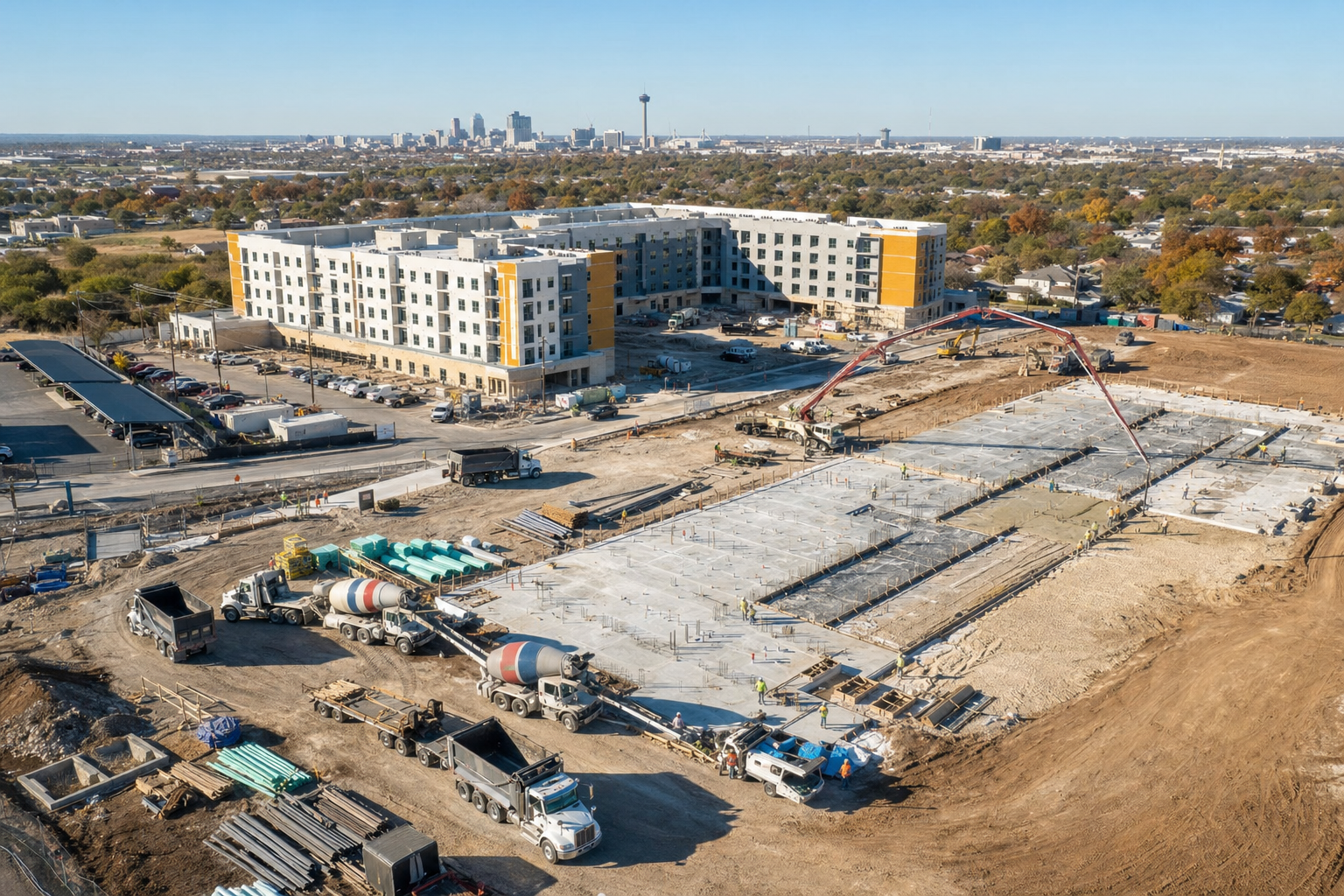
However, PT slab success depends entirely on continuous concrete placement. A 50,000-square-foot building pad might require 600 cubic yards of ready-mix concrete delivered in a single pour lasting six to eight hours. Any interruption in concrete supply creates cold joints that compromise structural integrity and tensioning effectiveness. This makes aggregate hauling and ready-mix logistics critical path items in your schedule.
💡 Pro Tip: Post-tensioned slabs require moisture barriers and proper drainage systems to minimize seasonal soil movement beneath the foundation. Budget for polyethylene sheeting, perimeter drains, and careful grading during site prep.
### Mat Foundations for Multi-Story Residential Buildings
Mat foundations—also called raft foundations—provide a heavily reinforced concrete slab designed to support higher building loads across poor soil conditions. These systems work well for four-story and taller multifamily structures where soil bearing capacity limits conventional spread footing approaches. A typical mat foundation for a mid-rise apartment building might measure 24 to 36 inches thick with dense rebar schedules and strategic thickening at column locations.
Mat foundations excel in situations where deep excavation isn’t feasible or where underlying soil exhibits significant variability in bearing capacity. By spreading loads across the entire building footprint, mat systems reduce differential settlement and accommodate moderate soil movement. The trade-off comes in material quantities: a mat foundation requires substantially more concrete, reinforcing steel, and aggregate base preparation than a PT slab.
From a construction logistics perspective, mat foundations present unique hauling challenges. The thicker concrete section demands larger aggregate deliveries for base preparation, and the extended pour duration requires careful coordination between multiple ready-mix batch plants. Building for Tomorrow: San Antonio’s Construction Growth Demands Smarter Material Logistics becomes essential when your project timeline depends on uninterrupted concrete flow to a central San Antonio jobsite.
### Deep Pier and Grade Beam Systems
Deep pier systems with elevated grade beams offer the most robust solution for multifamily foundations on highly expansive or unstable soils. This approach uses drilled concrete piers extending 15 to 30 feet below grade—or deeper—to reach stable bearing strata beneath reactive clay layers. Grade beams spanning between pier caps support the building’s slab and structural loads while allowing soil beneath the beams to heave and shrink without affecting the structure.
While deep pier systems carry higher upfront costs, they virtually eliminate foundation movement issues that plague shallower systems on problem soils. For luxury apartment developments or projects on sites with known geotechnical challenges, the long-term performance and reduced maintenance justify the investment. The construction sequence involves mobilizing drilling rigs, installing rebar cages, pouring pier concrete, then forming and pouring grade beams before finally placing the elevated slab.
The hauling and logistics footprint for pier systems differs significantly from slab work. Drilling operations generate spoil material requiring removal, while pier concrete placement happens in smaller increments over an extended timeline rather than single mass pours. Grade beam and slab pours still demand continuous concrete delivery, but staging requirements shift to accommodate drilling equipment, rebar storage, and spoil hauling operations.
Foundation System
Typical Building Height
Soil Suitability
Relative Cost
Hauling Complexity
Post-Tensioned Slab
1–3 stories
Moderate clay movement
$$
Medium (continuous pour critical)
Mat Foundation
4–6 stories
Variable bearing capacity
$$$
High (large material volumes)
Deep Pier & Grade Beam
Any height
Highly expansive soils
$$$$
High (extended timeline, spoil removal)
Understanding these structural options helps developers and contractors make informed decisions early in project planning. The foundation system you select directly impacts excavation requirements, aggregate volumes, concrete placement logistics, and ultimately your construction timeline. With over 3,500 active multifamily units under construction heading into 2026 across Bexar and Comal counties, choosing the right system and planning the hauling logistics that support it separates projects that finish on schedule from those that hemorrhage budget in delays.
Overcoming Central Texas Soil Challenges in Apartment Foundation Design
Central Texas soils present unique challenges for **multifamily concrete contractor** teams building apartment foundations. The region’s geology features highly expansive clay formations—particularly Eagle Ford and Houston Black clays—that shrink dramatically during dry periods and swell when moisture returns. This cyclical movement creates forces capable of cracking concrete, displacing foundations, and damaging building structures if not properly addressed during design and construction.
### Eagle Ford and Houston Black Clay Characteristics
Eagle Ford clay, prevalent across northern Bexar County and into Comal County, exhibits plasticity indices often exceeding 40, indicating severe expansion potential. These dark gray to black clays contain smectite minerals that absorb water molecules into their crystalline structure, causing volumetric changes of 10 percent or more between wet and dry states. For multifamily foundations, this means soil beneath your building pad can lift several inches during wet seasons and drop equally during drought periods.
Houston Black clay, common in eastern portions of the San Antonio metro area, shares similar expansion characteristics with even higher shrink-swell potential in some locations. Both soil types require specialized foundation design approaches, extensive site preparation, and careful moisture management to prevent long-term structural problems. Standard foundation systems designed for stable soils fail quickly when placed on untreated expansive clays.
The practical impact on **concrete foundations for apartments** shows up in several ways. Differential movement—where one portion of a foundation heaves while another settles—creates stress concentrations that crack concrete and damage building finishes. Uniform heave across an entire foundation might not crack the structure but can still displace utilities, damage site improvements, and cause operational problems. Either scenario demands engineering solutions implemented during the construction phase.
### Site Preparation Strategies for Expansive Soils
Proper site preparation forms the first line of defense against expansive soil damage. For multifamily projects in San Antonio, this typically begins with moisture conditioning the building pad area before foundation construction starts. Engineers often specify removing the top two to four feet of highly plastic clay and replacing it with select fill material exhibiting lower expansion potential. This undercut-and-replace approach creates a more stable substrate for foundation placement.
Select fill materials commonly used in Central Texas apartment foundation preparation include crushed limestone base, cement-treated base, and lime-stabilized native clay. Each material offers different cost-to-performance ratios depending on site conditions and budget constraints. Crushed limestone provides excellent drainage and minimal shrink-swell characteristics but requires hauling significant material volumes from quarries. Lime stabilization reduces clay plasticity by chemically modifying the soil structure, often using less imported material than complete replacement approaches.
The hauling logistics for site preparation can dwarf foundation concrete deliveries in terms of truck trips and total tonnage moved. A five-acre multifamily site requiring three feet of undercut and replacement with crushed limestone might need 6,000 to 8,000 cubic yards of material—representing 400 to 500 dump truck loads. Coordinating this volume of aggregate delivery while maintaining access for other site work requires experienced hauling partners who understand construction sequencing and can flex delivery schedules around weather and site conditions.
💡 Pro Tip: Schedule aggregate deliveries for base preparation during dry weather windows when possible. Wet conditions turn expansive clay into a muddy mess that halts truck traffic and prevents proper compaction of imported fill materials.
### Specialized Concrete Mixes for Expansive Soil Conditions
Beyond structural design and site preparation, concrete mix specifications play a crucial role in foundation performance on expansive soils. Standard ready-mix concrete designed for general construction may not provide adequate resistance to the sulfate-rich groundwater often associated with Central Texas clays. Houston Black and Eagle Ford formations frequently contain soluble sulfates that attack portland cement, causing deterioration over time.
Sulfate-resistant concrete mixes use Type II or Type V portland cement with lower tricalcium aluminate content to resist chemical attack. These specialized mixes cost more than standard concrete but provide necessary durability for foundations in direct contact with expansive clay soils. The mix design might also specify lower water-cement ratios for increased density and reduced permeability, further protecting the foundation from moisture intrusion and chemical exposure.
Fiber reinforcement added to foundation concrete provides another layer of protection against cracking caused by soil movement. Synthetic fibers distributed throughout the mix help control plastic shrinkage cracking during curing and improve the concrete’s ability to resist tensile stresses from differential foundation movement. While fibers don’t replace structural reinforcing steel, they enhance overall foundation durability in challenging soil conditions.
Working with ready-mix suppliers familiar with Central Texas soil conditions ensures your concrete specifications address local challenges. From Raw Land to Finished Community: A San Antonio Developer’s Guide to Site Preparation and Hauling highlights the importance of selecting experienced partners who understand regional construction requirements and can deliver materials that perform in local conditions.
### Moisture Management and Drainage Systems
Long-term foundation performance on expansive soils depends heavily on moisture management around and beneath the structure. The goal is maintaining relatively consistent soil moisture levels to minimize seasonal shrink-swell cycles. This requires a comprehensive drainage strategy implemented during foundation construction and integrated into site grading and landscaping plans.
Perimeter drainage systems—typically perforated pipe in gravel-filled trenches—intercept surface water and groundwater before it reaches foundation-supporting soils. These drains route collected water to storm sewers or appropriate discharge points away from the building. Interior drainage systems beneath slab foundations, combined with moisture barriers, prevent water vapor migration from soil into living spaces while helping regulate soil moisture beneath the structure.
Proper site grading directs surface water away from apartment buildings, preventing ponding near foundations that accelerates soil expansion. Landscaping irrigation systems require careful design to avoid over-watering areas adjacent to foundations. The combination of drainage, grading, and controlled irrigation creates a stable moisture environment that minimizes the foundation movement potential inherent in expansive clay soils.
These moisture management systems require additional materials and hauling coordination during construction. Drainage aggregate, filter fabric, pipe materials, and backfill all demand delivery scheduling that integrates with foundation work. Experienced contractors build these hauling requirements into critical path schedules rather than treating them as afterthoughts that delay subsequent construction phases.
Hauling and Logistics Planning for Concrete Foundations and Multifamily Apartments
The logistics of moving materials to multifamily foundation sites in San Antonio requires detailed planning that starts weeks before the first concrete truck arrives. Unlike residential projects where foundation work might span several days with modest material volumes, apartment developments demand coordinating hundreds of truck loads across compressed timelines. The difference between a successful pour and a costly failure often comes down to hauling logistics executed by partners who understand construction sequencing and delivery coordination.
### Estimating Aggregate and Concrete Volumes
Accurate quantity takeoffs form the foundation of effective hauling logistics. For a typical 200-unit garden-style apartment development, site preparation might require 4,000 to 6,000 cubic yards of select fill material for building pad areas, plus additional aggregate for parking lots, access roads, and utility trenches. Foundation concrete volumes depend on the structural system, but a PT slab project of this size typically uses 800 to 1,200 cubic yards of ready-mix concrete for the main building foundations.
Ready to Order?
Call Now: 210-983-8005
Same-day delivery available on most orders in San Antonio and surrounding cities
These volumes translate directly into truck requirements and delivery schedules. At 10 to 12 cubic yards per end-dump load, moving 5,000 yards of crushed limestone base requires 400 to 500 truck trips. Spread across a two-week delivery window, that averages 40 to 50 loads per day—more during optimal weather windows when site conditions allow faster unloading and spreading. Ready-mix concrete arrives in smaller increments per truck but demands tighter delivery coordination to maintain continuous placement.
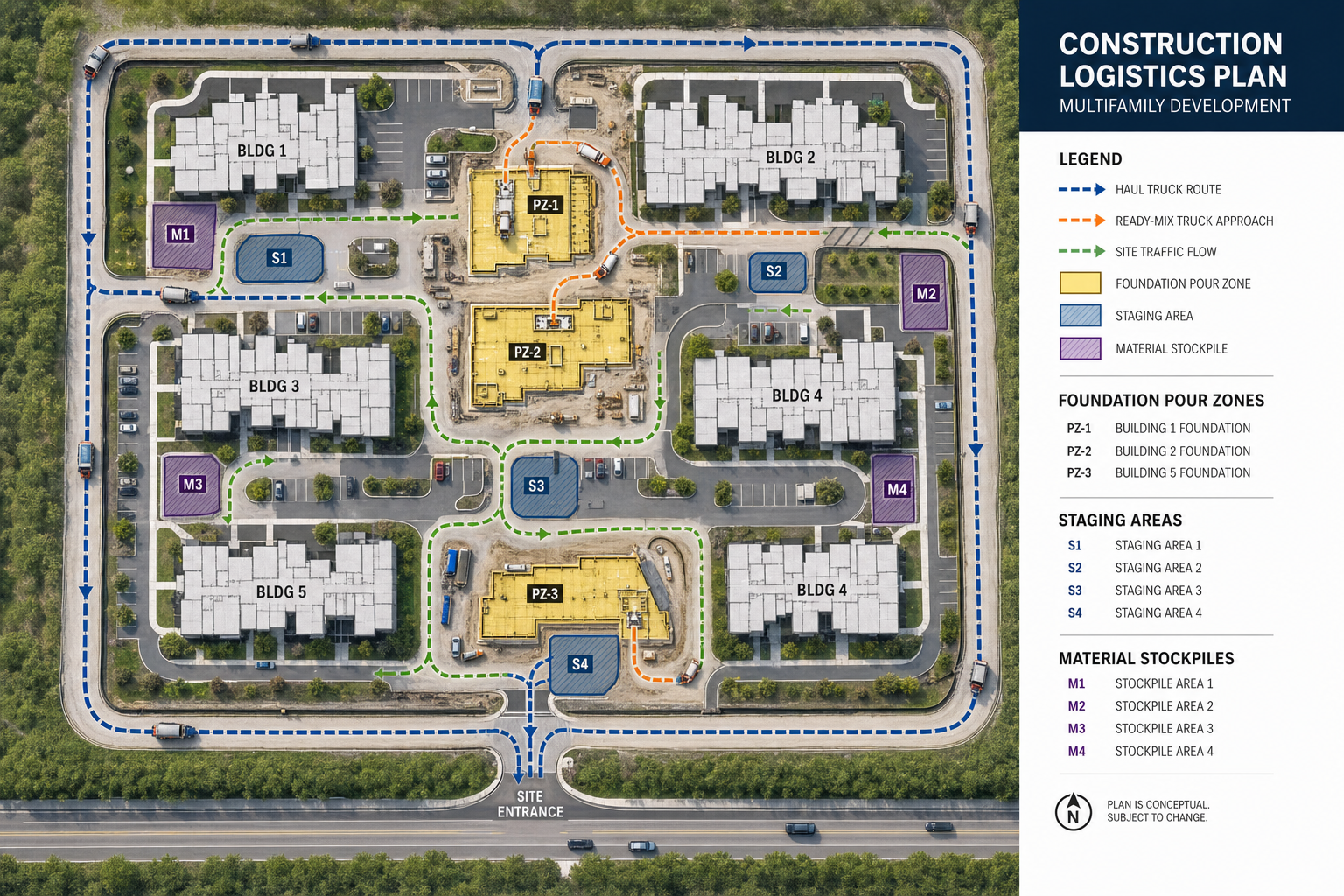
The hauling plan must account for material staging areas, site access constraints, and coordination with other construction activities. A multifamily site with foundation work progressing simultaneously on multiple buildings requires mapping truck routes, staging locations, and pour sequences that prevent traffic bottlenecks and keep materials flowing efficiently. Dump Truck Deliveries & Logistics for Commercial Hauling Sites in New Braunfels explores similar coordination challenges in nearby markets where commercial development demands sophisticated material logistics.
### Selecting Aggregate Sources and Evaluating Haul Distances
Material source selection impacts both cost and schedule reliability for multifamily foundation projects. Central Texas benefits from numerous limestone quarries, but haul distance affects per-yard delivered pricing and truck fleet requirements. A quarry 15 miles from your jobsite allows faster truck cycles than one 40 miles away, meaning fewer trucks can maintain the same delivery rate—or the same fleet can deliver more material per day from the closer source.
However, the closest quarry isn’t always the best choice. Material quality, production capacity, and supplier reliability matter more than proximity when foundation timelines are at stake. A quarry that produces consistent gradation and can commit dedicated truck capacity during your scheduled pour window provides more value than a closer source with variable material quality or limited delivery capacity.
Most San Antonio multifamily projects source crushed limestone from quarries in northern Bexar County or southern Comal County, where established operations provide reliable material quality and sufficient production capacity for large commercial projects. These quarries maintain relationships with trucking companies capable of scaling delivery fleets for major pours, ensuring your schedule doesn’t depend on a single small hauler who can’t adjust to changing site conditions or timeline compression.
### Coordination Between Aggregate Delivery and Foundation Sequencing
Foundation construction progresses through distinct phases, each with specific material requirements and hauling demands. Site preparation and base placement happen first, requiring the bulk of aggregate deliveries before any concrete placement begins. This phase offers some flexibility in scheduling since material can be stockpiled on-site if space allows, providing a buffer against weather delays or supply interruptions.
Once foundation forming begins, the focus shifts to concrete delivery planning. Ready-mix concrete has a limited workable life after batching—typically 90 minutes under normal conditions—so stockpiling isn’t an option. Every cubic yard must arrive at the jobsite, discharge into pumps or buggies, and reach its final placement location before the concrete begins setting. This demands precise coordination between batch plants, concrete haulers, and site crews.
The transition from aggregate hauling to concrete placement requires careful logistics planning. Dump trucks delivering base material can’t conflict with ready-mix trucks approaching pour areas, yet both might need site access on overlapping days. Staging areas must accommodate material stockpiles without blocking concrete truck routes. These coordination challenges multiply across multi-building apartment developments where different structures progress through various construction phases simultaneously.
Experienced dump truck material delivery partners understand construction sequencing and can adjust hauling schedules around foundation work phases. Rather than committing to rigid delivery windows that don’t flex with actual site progress, reliable haulers maintain communication with site superintendents and adjust truck dispatch based on real-time conditions and construction pace.
### Fleet Sizing and Backup Capacity Planning
Determining the right number of trucks for multifamily foundation logistics requires understanding both average delivery rates and peak demand scenarios. For base preparation work that spans several weeks, average daily delivery capacity matters more than maximum surge capability. A fleet of six to eight dump trucks can typically maintain steady progress on site prep while allowing for maintenance, weather delays, and other interruptions.
Concrete placement demands different thinking. A large foundation pour might require continuous delivery at 80 to 100 cubic yards per hour for six to eight hours. Ready-mix trucks averaging 10 yards per load need 15-minute cycle times—from batch plant loading to jobsite discharge and return—to maintain this pace. Longer haul distances require more trucks in the delivery rotation to sustain the necessary flow rate.
The critical question isn’t whether your primary hauler owns enough trucks, but whether they maintain backup capacity and supplier relationships to handle unexpected situations. Mechanical breakdowns, traffic accidents, and weather delays happen on every project. Haulers with access to additional trucks through partner companies or rental agreements can maintain delivery schedules when problems arise. Those operating on the margin with no excess capacity leave your project vulnerable to delays when—not if—something goes wrong.
💡 Pro Tip: Build 10 to 15 percent contingency into your hauling schedule for weather delays, site access issues, and unexpected complications. Multifamily foundation projects rarely proceed without some schedule adjustment, and flexible hauling logistics absorb these changes without derailing the overall timeline.
With more than $2 billion in regional highway and bridge contracts across Central Texas increasing competition for dump truck fleets and aggregate transport capacity, securing committed hauling partners early in your project planning process prevents last-minute scrambling for trucks when you’re ready to pour. The developers winning in San Antonio’s competitive multifamily market understand that hauling logistics aren’t support services to be procured at the last minute—they’re critical path items that deserve the same attention as structural engineering and concrete specifications.
Dispatch Synchronization: Aggregate Hauling and Continuous Concrete Pours
The moment concrete batching begins for a multifamily foundation pour, the project clock starts ticking. Every minute counts as ready-mix concrete begins its chemical curing process, setting a hard deadline for placement and finishing operations. For large apartment foundation projects requiring hundreds of cubic yards in a single continuous pour, dispatch synchronization between batch plants, ready-mix haulers, and site crews determines whether you achieve a monolithic structural foundation or create cold joints that compromise performance.
### Batch Plant Coordination and Capacity Verification
Large multifamily concrete pours often exceed the practical capacity of a single ready-mix batch plant, especially when delivery distance adds 30 to 40 minutes to each truck cycle. A foundation requiring 600 cubic yards placed over six hours needs an average delivery rate of 100 cubic yards per hour. With 10-yard trucks on 30-minute cycles, you need at least five trucks per batch plant in continuous rotation—or coordinate deliveries from multiple plants to maintain the required flow.
Pre-pour meetings with ready-mix suppliers verify production capacity, truck availability, and backup plans if primary resources fail. These discussions cover mix design approval, testing protocols, admixture coordination for hot or cold weather, and communication procedures during the pour. The ready-mix supplier needs to understand your pour sequence, placement methods, and any access constraints that might slow truck discharge operations.
Critical questions to resolve before pour day include:
– What is the batch plant’s maximum sustainable production rate for your specified mix?
– How many trucks will the supplier dedicate to your project?
– What backup batch plants can supply concrete if primary production issues arise?
– Who is the supplier’s point of contact during the pour for real-time coordination?
– What communication methods (radio, phone, text) work best for dispatch adjustments?
Experienced **multifamily concrete contractor** teams don’t assume verbal commitments guarantee performance. They confirm batch plant capacity in writing, verify truck fleet commitments, and establish clear protocols for pour day communication. When your construction schedule depends on uninterrupted concrete flow, documentation and verification prevent misunderstandings that lead to costly delays.
### Real-Time Dispatch Management During Foundation Pours
Once the pour begins, site conditions and placement rates determine concrete delivery scheduling. Pump operators, finishers, and concrete superintendents monitor placement progress and communicate directly with ready-mix dispatch to adjust truck intervals. If finishing crews fall behind planned placement rates, dispatch slows truck departures to prevent concrete trucks from queuing on-site. When placement accelerates, dispatch increases delivery frequency to keep finishers supplied with fresh concrete.
This dynamic adjustment requires experienced dispatch coordination and clear communication channels. Some ready-mix suppliers use GPS tracking and automated dispatch systems that show real-time truck locations and estimated arrival times. This visibility helps site crews anticipate concrete arrival and prepare pump positioning or discharge locations. Less sophisticated operations rely on phone communication between site and dispatch, which works but requires more active management.
The consequences of poor dispatch coordination show up quickly during large pours. Too many trucks arriving simultaneously create traffic jams at pump locations, forcing some trucks to circle the site or wait on public roads. This delays concrete placement and can cause trucks to exceed the maximum time allowed between batching and discharge. Too few trucks create gaps in concrete flow, allowing previously placed concrete to begin setting before new concrete ties into it—the definition of a cold joint.
Cold joints represent one of the most serious defects in multifamily foundation construction. These weak planes within the foundation occur when concrete placement pauses long enough for the initial set to begin, then resumes with new concrete that doesn’t properly bond to the previous placement. Cold joints create stress concentrations, reduce structural capacity, and provide pathways for water intrusion. In post-tensioned slabs, cold joints can compromise cable effectiveness and foundation performance.
Preventing cold joints requires maintaining continuous concrete placement throughout the entire pour. For apartment foundations, “continuous” means keeping fresh concrete flowing at a rate that allows finishing crews to work previously placed areas while new concrete ties properly into adjacent sections. The acceptable gap between concrete placements varies with temperature and mix design but typically ranges from 30 to 90 minutes. Beyond these windows, cold joint formation becomes likely.
### Aggregate Haul Truck Route Optimization Along Major Corridors
While ready-mix delivery logistics dominate pour day operations, the weeks of aggregate hauling before concrete placement require their own route optimization and scheduling strategies. San Antonio’s major transportation corridors—I-35, I-10, Loop 1604, and US 281—carry the bulk of dump truck traffic between quarries and multifamily construction sites. Understanding traffic patterns, peak congestion periods, and alternative routing options helps maintain consistent delivery rates despite urban traffic challenges.
Morning and evening rush hour periods significantly impact haul truck cycle times through central San Antonio. A quarry-to-jobsite route that takes 25 minutes at mid-morning might stretch to 45 minutes during peak traffic, effectively doubling the number of trucks needed to maintain delivery rates. Experienced haulers plan aggregate delivery schedules around these patterns, concentrating truck movements during mid-day windows when traffic flows freely.
Route selection also considers road conditions, weight restrictions, and access constraints at both ends of the haul. Some San Antonio area quarries require trucks to use specific exit routes to avoid residential neighborhoods or roads with weight restrictions. Multifamily jobsites in dense urban areas might allow truck access only from certain directions or during specific hours to minimize community impacts. These constraints feed into dispatch planning that maintains delivery commitments while respecting local regulations.
Dump Truck Material Delivery San Antonio Texas discusses how local haulers navigate urban delivery challenges while maintaining schedule reliability. The strategies that work for residential material delivery scale up for multifamily projects, with added complexity from larger material volumes and tighter timeline requirements.
### Technology Tools for Hauling Logistics Coordination
Modern construction projects increasingly use technology platforms to coordinate material deliveries and track jobsite logistics. Some multifamily developers require hauling companies to use specific software systems that provide real-time truck location data, automated delivery confirmations, and digital ticketing for material quantities. These systems improve visibility for project managers tracking critical path construction activities and provide documentation for payment verification.
GPS tracking systems help dispatchers monitor truck locations and adjust schedules when traffic delays or site access issues affect delivery times. Automated alerts notify site personnel when trucks approach the jobsite, allowing them to prepare unloading areas and coordinate with other site activities. Digital ticketing eliminates paper tickets that can be lost or damaged, ensuring accurate records for material quantities delivered and used.
However, technology only enhances hauling logistics when combined with experienced dispatch management and driver professionalism. The best tracking system can’t overcome a hauler who doesn’t understand construction sequencing or communicate effectively with site superintendents. Dirt Hauling Services remain fundamentally relationship-driven businesses where trust, communication, and field experience matter more than software platforms.
The integration of reliable hauling logistics with precise dispatch coordination creates the foundation for successful multifamily concrete placement. When aggregate deliveries progress steadily during site preparation, when ready-mix trucks arrive at consistent intervals during pours, and when communication flows smoothly between batch plants, haulers, and site crews, foundation construction proceeds on schedule and on budget. These logistics fundamentals separate multifamily projects that finish on time from those that struggle with delays, cost overruns, and quality issues stemming from poor material coordination.
Permitting, Route Compliance, and Traffic Management in San Antonio
Moving hundreds of dump truck loads through San Antonio and surrounding counties for multifamily foundation construction requires navigating a complex regulatory environment governing commercial vehicle operations, road weight limits, and municipal traffic restrictions. Understanding permitting requirements, route compliance obligations, and local traffic management regulations helps contractors avoid costly delays, citations, and project disruptions during critical foundation construction phases.
### Heavy Vehicle Transit Permits in Bexar and Comal Counties
Standard commercial dump trucks operating at legal weight limits—typically 80,000 pounds gross vehicle weight on interstate highways—don’t require special permits for normal operations. However, multifamily foundation work sometimes involves oversized loads, specialized equipment hauling, or operations in jurisdictions with specific permitting requirements beyond standard commercial vehicle registration.
Bexar County and the City of San Antonio issue various permits affecting construction vehicle operations. Haulers using county roads not designed for heavy commercial traffic may need special permits documenting route approval and weight limitations. Some residential areas adjacent to multifamily construction sites restrict commercial vehicle hours or require advance notification before hauling operations begin. These local requirements vary by jurisdiction and sometimes by specific roadway.
Comal County’s rapid growth around New Braunfels has prompted increasing scrutiny of commercial vehicle operations on county roads serving developing areas. Haulers operating in these markets work with county officials to identify approved routes, understand seasonal weight restrictions on certain roads, and comply with noise ordinances affecting early morning or late evening operations. The permit requirements change periodically as counties update ordinances responding to development pressure and community concerns.
Schedule Delivery in Minutes
Get Your Free Quote Today
Tell us your location, access, and estimated yardage — we’ll handle the rest
The practical impact on multifamily projects shows up in route planning and hauling cost estimates. A quarry that requires haulers to use a longer route avoiding restricted roads adds time to each truck cycle, increasing the fleet size needed to maintain delivery rates. Permits requiring advance notification or limiting operating hours compress the available delivery window, potentially extending the overall timeline for foundation preparation work.
💡 Pro Tip: Verify hauling permit requirements during project planning, not after you’re ready to start deliveries. Some jurisdictions require 30-day advance notice for commercial vehicle permits, and missing this deadline can delay your entire foundation schedule.
### Road Weight Limits and Seasonal Restrictions
Texas transportation regulations establish maximum weight limits for commercial vehicles operating on state and county roads. While interstate highways accommodate standard 80,000-pound loads, many county roads and municipal streets carry lower weight limits ranging from 40,000 to 60,000 pounds. These restrictions protect pavement structures not designed for heavy commercial traffic and become particularly important during wet weather when saturated soil conditions reduce road support capacity.
Seasonal weight restrictions affect farm-to-market roads and county routes in rural areas around San Antonio during late winter and early spring when soil moisture levels peak. Road departments may post temporary weight limits 20 to 30 percent below normal maximums to prevent pavement damage during these vulnerable periods. Haulers operating during restricted periods must reduce load sizes, effectively increasing the number of truck trips needed to deliver required material quantities.
For multifamily projects in developing areas outside San Antonio’s core urban zone, road weight limits directly impact hauling logistics and costs. If the most direct route from quarry to jobsite crosses a county road with a 50,000-pound weight limit, trucks must reduce loads or use alternative routes that add haul distance. Either option increases delivery costs and potentially extends the delivery timeline compared to projects with unrestricted access routes.
Working with hauling companies that understand local road networks and weight restrictions prevents surprises when deliveries begin. Experienced operators know which routes accommodate full loads year-round versus seasonal restrictions that require planning adjustments. They communicate these constraints during the estimating phase so project budgets and schedules reflect actual hauling realities rather than assumptions that don’t account for local regulations.
### Municipal Regulations and Community Impact Mitigation
San Antonio’s municipal code addresses commercial vehicle operations through provisions governing noise, hours of operation, route restrictions, and community impact mitigation measures. Multifamily developments in established neighborhoods often face stricter operating requirements than projects in commercial or industrial zones. These regulations aim to balance construction activity necessary for the city’s growth with quality of life protection for residents living near development sites.
Typical restrictions affecting multifamily foundation hauling operations include:
– Limits on commercial vehicle operations before 7:00 AM or after 7:00 PM on weekdays
– Complete prohibition of noisy construction activities on Sundays in residential zones
– Requirements for wheel washing stations to prevent mud tracking on public streets
– Designated truck routes that avoid specific residential streets even when direct access exists
– Noise level limits measured at property boundaries adjacent to construction sites
These regulations require contractors to compress hauling operations into daytime working hours, potentially extending the calendar time needed to complete aggregate deliveries for foundation preparation. A project that could complete base placement in one week with round-the-clock hauling might require two weeks when restricted to 10-hour daily operating windows. Schedule planning must account for these constraints from the beginning rather than discovering them after work starts.
Community impact mitigation goes beyond regulatory compliance to address practical concerns from residents and businesses adjacent to construction sites. Street sweeping to remove tracked dirt, traffic control personnel directing truck movements at site entrances, and clear communication with affected property owners prevent complaints that can trigger increased regulatory scrutiny or stop-work orders. Building for Tomorrow: San Antonio’s Construction Growth Demands Smarter Material Logistics emphasizes the importance of community-conscious construction practices in maintaining positive relationships with local jurisdictions and neighbors.
### Coordinating With TxDOT for State Highway Access
Many multifamily developments in San Antonio’s suburban growth corridors require access via state highways controlled by the Texas Department of Transportation (TxDOT). Temporary construction entrances connecting projects to state routes need formal TxDOT approval through an access permit process that evaluates traffic safety, sight distance, and pavement protection measures. These permits take weeks to obtain and require specific entrance construction standards including paved approaches, drainage provisions, and sometimes traffic control measures.
TxDOT access permits typically mandate rock stabilization or paving for the initial 50 to 100 feet of construction entrance to prevent mud and debris from tracking onto state highways. This requirement protects the traveling public and state road infrastructure, but adds upfront cost and schedule time before hauling operations can begin. Projects that fail to secure access permits before starting work risk stop-work orders, citations, and forced remediation that delay foundation schedules.
Highway access points also require ongoing maintenance during construction. Rain events that turn jobsites muddy can quickly create hazardous conditions where tracked soil accumulates on highways. TxDOT inspectors monitor construction sites with state highway access and can issue violations requiring immediate cleanup or enhanced entrance stabilization. Budgeting for entrance maintenance and having street sweeping resources on standby prevents these compliance issues from interrupting hauling operations.
Large multifamily projects generating hundreds of dump truck movements sometimes trigger TxDOT requirements for temporary traffic signals or turn lanes at construction access points. These improvements carry significant costs and require engineering design, permits, and construction before hauling begins. Early coordination with TxDOT during site planning identifies these requirements in time to complete necessary improvements without delaying foundation work.
The regulatory environment surrounding heavy vehicle operations in San Antonio reflects the region’s transformation from a mid-sized Texas city to a major metropolitan area with sophisticated transportation infrastructure and heightened awareness of construction impacts. Contractors and developers who understand and proactively address permitting, weight restrictions, and community impact requirements maintain schedule momentum through foundation construction phases. Those who treat these requirements as afterthoughts or obstacles rather than standard operating procedures face delays, cost overruns, and strained relationships with regulators and communities.
Jobsite Traffic Management and Staging for High-Density Developments
Once aggregate haulers and ready-mix trucks reach multifamily construction sites, internal traffic management determines whether materials flow efficiently to work areas or create bottlenecks that slow construction progress. High-density apartment developments occupy relatively compact footprints where multiple buildings, parking areas, utilities, and access routes compete for limited space. Effective jobsite traffic planning separates truck movements from other construction activities, maintains clear paths to pour locations, and stages materials to minimize handling and rehandling.
### Site Access Planning and Entrance Configuration
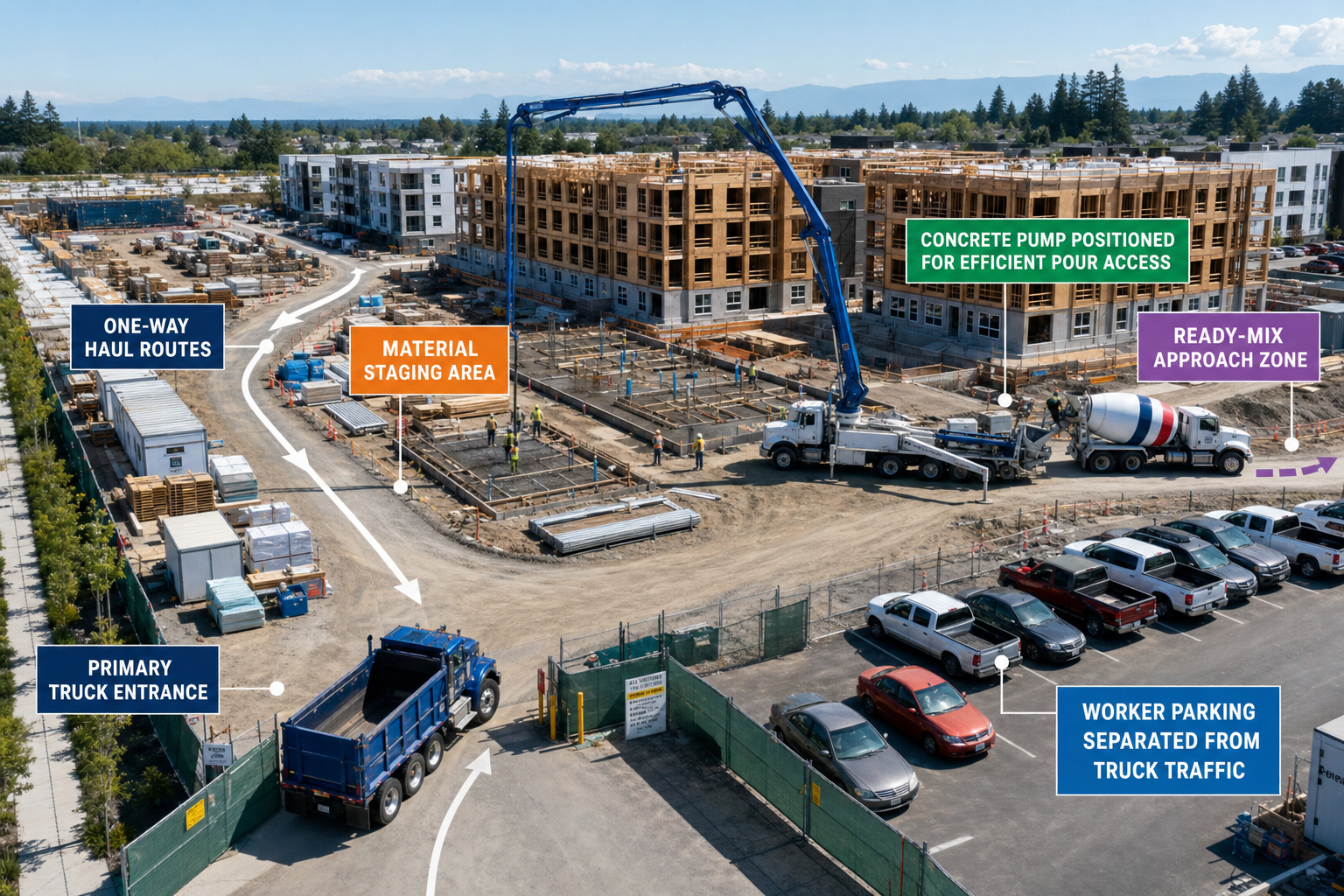
Most multifamily developments require multiple access points to separate truck traffic from worker parking, material deliveries, and construction equipment movements. Large projects establish dedicated haul routes through the site with one-way traffic patterns that prevent trucks from conflicting at narrow pinch points or backing operations that create safety hazards. Entrance locations consider both site geometry and public road access, positioning gates where trucks can enter and exit without disrupting traffic on adjacent streets.
Entrance design affects truck cycle times and overall hauling efficiency. Wide entrances with gradual turns allow trucks to maintain momentum entering and exiting the site, while tight entrances with sharp turns force trucks to slow dramatically and sometimes require multiple positioning movements. For sites receiving hundreds of truck deliveries during foundation phases, entrance configuration differences can add 30 seconds to two minutes per truck cycle—time that compounds across the full delivery schedule.
Temporary entrance paving or heavy-duty rock stabilization creates all-weather access that functions during rainy periods when exposed soil turns to mud. San Antonio’s fall and winter construction season brings periodic rain events that can shut down unpaved entrances and strand trucks unable to navigate muddy conditions. Investment in proper entrance construction pays dividends in uninterrupted hauling operations and reduced cleanup costs from tracked soil.
### Material Staging Area Optimization
Strategic material staging reduces the number of times aggregate materials get handled before reaching final placement locations. Ideally, dump trucks discharge directly into spreading and compaction zones where loaders or dozers immediately place material in building pad areas. When direct placement isn’t possible, staging areas positioned close to work zones minimize rehandling distance and equipment hours.
Staging area layout considers material types, quantities, and consumption sequence. Crushed limestone base material arrives in large volumes early in the foundation preparation phase, requiring substantial stockpile space. Sand and gravel for drainage systems arrive in smaller increments later in the schedule, needing less storage area but convenient access when crews are ready for installation. Organizing staging areas by material type and usage timeline keeps the jobsite organized and prevents materials from being buried or inaccessible when needed.
Multifamily sites with limited staging capacity sometimes use off-site material yards with shuttle trucks moving materials to work areas as needed. This approach keeps the jobsite less congested but adds handling costs and logistics complexity. The trade-off makes sense when the main site genuinely can’t accommodate material stockpiles without blocking access or creating safety hazards, but on-site staging is always preferable when space allows.
### Pump Truck Positioning and Concrete Placement Logistics
Large multifamily foundation pours use concrete pump trucks to move ready-mix from street-accessible locations to pour areas that direct discharge trucks can’t reach. Pump positioning determines how efficiently concrete flows from ready-mix trucks through pumps to placement locations. Poor pump placement creates long hose runs that reduce concrete flow rates and increase pumping pressure, potentially causing line blockages or equipment failures during critical pour operations.
Experienced concrete superintendents walk the site before pour day to identify optimal pump locations considering ready-mix truck access, hose reach to all pour areas, and clearance for pump boom movements. They verify that pump trucks can set up on stable ground capable of supporting outrigger loads, and that overhead utility lines don’t interfere with boom positioning. This advance planning prevents last-minute scrambling when the concrete trucks are already approaching the jobsite.
Ready-mix truck access to pump locations requires clear, stable paths that allow continuous truck flow without backing or tight maneuvering. Some sites establish circular traffic patterns where trucks enter at one location, approach the pump for discharge, then exit via a different route without backing. This one-way flow maintains steady delivery rates and improves safety by eliminating blind backing maneuvers in congested construction zones.
Pour planning also accounts for multiple buildings or foundation sections requiring concrete on the same day. Some large apartment developments run concurrent pours using separate pump trucks and ready-mix fleets for different building locations. This approach accelerates schedule but demands sophisticated dispatch coordination to prevent mixing up concrete deliveries between pumps or creating conflicts when trucks approach from different directions.
### Safety Protocols for Mixed Truck and Worker Traffic
Construction sites with active hauling operations present significant safety challenges when trucks share space with workers on foot, excavation equipment, and utility installations. Effective traffic management establishes clear separation between truck routes and work zones, uses flaggers to control intersections where conflicts can occur, and maintains constant communication between truck drivers and site personnel.
High-visibility vesting requirements for all site workers help truck drivers identify personnel even in dusty or crowded conditions. Designated crossing points with positive traffic control prevent workers from randomly crossing truck routes where sight lines or vehicle speeds create hazards. Some multifamily sites use physical barriers—chain-link fencing, concrete jersey barriers, or cable demarcation—to separate active hauling routes from adjacent work areas.
Radio communication between site gates, flagger positions, and truck drivers provides real-time coordination when conditions change. A water line break, equipment breakdown, or emergency situation might require temporarily halting truck traffic until crews resolve the issue. Clear communication protocols ensure everyone knows when to stop truck movements and when operations can safely resume.
Pre-project safety meetings with hauling companies review site-specific hazards, traffic routes, speed limits, and emergency procedures. Truck drivers need to understand site conditions, know where they can and cannot operate, and recognize the authority of site safety personnel to stop operations when hazards develop. This alignment between trucking companies and general contractors creates a safety culture that protects workers while maintaining productive hauling operations.
The complexity of jobsite traffic management on multifamily foundations scales with project size and site constraints. A 50-unit garden-style development on an open suburban site presents straightforward logistics compared to a 300-unit mid-rise project on an infill site surrounded by existing development. Both require thoughtful planning, clear communication, and experienced coordination between site management, hauling companies, and ready-mix suppliers.
Topsoil Delivery San Antonio demonstrates how professional material haulers coordinate with site personnel to safely deliver materials in various construction environments. The same principles that ensure safe topsoil deliveries for landscaping work scale up to support multifamily foundation logistics where volumes are larger and schedule pressures are more intense.
Ready to streamline your multifamily foundation hauling and ensure reliable material delivery for your next apartment development? **Book Now
Fill Dirt · Gravel · Road Base · Sand · Topsoil · Asphalt Millings
Need Materials Delivered in San Antonio?
Call O’Leary Development Group for a fast quote on fill dirt, gravel, road base, sand, topsoil, or asphalt millings delivered in San Antonio.