Tailgate Spreading Gravel: A Driveway How-To for Homeowners
O'Leary Development GroupAugust 17, 2026
Learn how to effectively spread gravel using your dump truck's tailgate. Achieve an even, professional finish with this simple method.
San Antonio’s Go-To Material Supplier
Get a Free Per-Load Quote Today
Same-day delivery available · Transparent pricing · Licensed & insured
Yes, you can efficiently spread driveway- or small-road-grade gravel using a dump truck’s tailgate. Set the tailgate opening, drive forward slowly in low gear, and lift the bed steadily to meter the flow. That single combination, gate width, gear, and lift rhythm, is what separates a smooth, even ribbon of gravel from a lumpy mess that requires significant additional work to fix.
Here’s the fast version of the method:
Set the tailgate opening to roughly 3 to 4 inches for clean, angular driveway gravel.
Lift the truck bed slowly until gravel just contacts the tailgate before moving.
Shift into low gear and creep forward while releasing the gate.
Keep bed lift and forward speed in sync so the material flows in a steady ribbon, not a dump.
Compact the spread with truck passes or a plate compactor before calling the job done.
Quick settings callout: A 3 to 4 inch tailgate opening handles most washed or crushed driveway gravel. Tailgate spreading isn’t the right call for very wet, cohesive materials (think clay-heavy fill) or steep, unstable slopes where a loaded truck risks losing traction. In those cases, pile dumping and hand spreading is the safer bet.
Key Takeaways
Tailgate spreading gravel works because it turns a tailgate into a metering gate, controlled by opening width, forward speed, and bed lift rather than a simple dump.
Point
Details
Set the opening first
Dial in roughly 3 to 4 inches for clean driveway gravel, then confirm with a short trial pass.
Sync speed and bed lift
Drive low gear and slow, lifting the bed steadily to keep the ribbon of gravel even.
Know the material limits
Switch to pile dumping for wet, cohesive, or clay-heavy fill that risks slugging.
Compaction finishes the job
Truck passes, a roller, or a plate compactor lock the spread in place and prevent rutting.
Hire it out when needed
Olearydevelopmentgroup offers tailgate-spread-ready trucks with transparent per-load pricing across San Antonio.
What Is Tailgate Spreading Gravel and When Should You Use It?
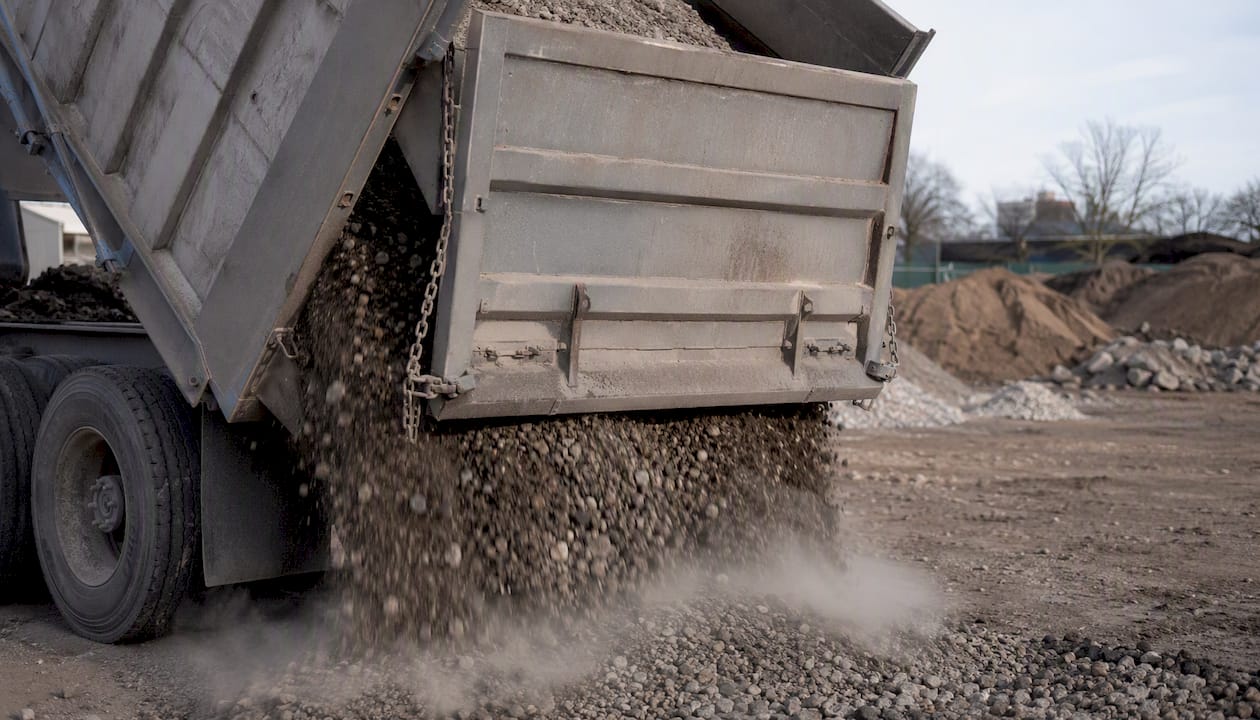
Tailgate spreading, sometimes called tailgating in the hauling trade, is the practice of releasing gravel through a partially opened tailgate while the truck drives forward. Instead of dumping one giant pile and shoveling it out by hand, the driver meters material out in a continuous ribbon as the truck moves, laying down a rough base course in a single pass.
It’s the standard technique for driveways, private road resurfacing, and short access lanes—anywhere a truck can drive the length of the area and there’s room to maneuver. A 3-year Pennsylvania study comparing aggregate placement methods found no significant difference in long-term road performance between material placed by tailgating and material placed by a motor paver. For a homeowner without paving equipment, that’s a meaningful data point: tailgating isn’t a shortcut that sacrifices quality, it’s a legitimate placement method with a track record.
Tailgating works best on relatively flat, accessible ground with clean, free-flowing aggregate. It struggles on tight, obstacle-heavy sites, sharp inclines, or with sticky, wet fill that clumps instead of pouring.
Site Prep Checklist and What to Tell the Delivery Driver
Before the truck ever shows up, the single biggest factor in how well your spread turns out is how short the distance is between where the truck drops material and where you actually want it. Minimizing that transfer distance is the number one prep step, and it costs nothing but a little planning.
Walk the route the truck will take. Confirm there’s enough clearance for the height of a loaded dump truck (watch for low tree branches and power lines), and check that the ground can bear the weight of a fully loaded truck without rutting or sinking, especially after rain. If the truck needs to back in, make sure there’s a turning area big enough that the driver isn’t forced into tight, repeated maneuvers.
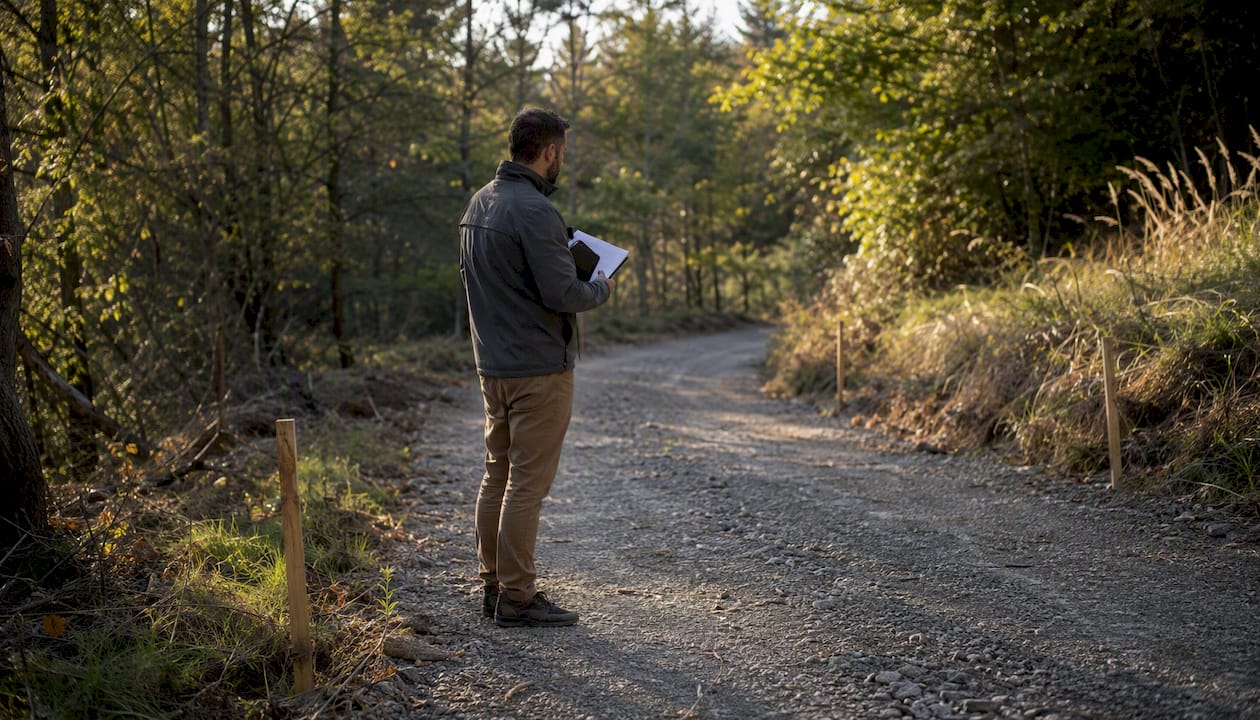
Mark your drop zone and desired path with stakes, cones, or a line of chalk so there’s no ambiguity when the truck arrives. Clear loose debris, toys, hoses, anything that could get buried or damaged.
When the driver arrives, don’t just say “spread the gravel.” Use the specific term. Tell them: “I’d like this tailgate spread along this line, about this thick, starting here and ending there.” Naming the technique specifically (rather than saying “spreading” or “dumping”) helps the driver arrive prepared with the right mindset and equipment expectations.
Pro Tip:Have your desired gravel thickness in inches ready before the truck arrives. “About 3 inches compacted” gives the driver a real target, while “just spread it around” invites guesswork and an uneven base.
How to Set the Tailgate and What Equipment Actually Matters
Most dump trucks used for aggregate delivery have a chain-and-hook system that limits how far the tailgate can swing open, and some are fitted with dedicated spreader bars or gates designed specifically for controlled release. The chain length determines the gate opening, and the opening determines how much material escapes per second of forward travel.
For standard washed or crushed driveway gravel, operators typically dial in an opening around 3 to 4 inches. Some trucks use roughly 26 links of chain to produce close to a 3 inch gap, with a few additional links widening it from there, though this varies by vehicle and hitch hardware, so it’s worth treating any specific link count as a starting point rather than a rule. The only reliable way to confirm your setting is right is a short trial pass: lift the bed a few inches, watch how the material releases, and adjust before committing to the full driveway.
Texas DOT’s equipment guidance goes a step further and recommends mechanical or air-operated spreader installations precisely because they remove the need for anyone to ride on the tailgate spreader, a real safety upgrade over older manual setups.
Opening Width
Typical Use Case
Notes
2 to 3 inches
Fine or pea gravel, thin top-dressing
Slower flow, good for finish layers
3 to 4 inches
Standard washed/crushed driveway gravel
Most common setting for residential jobs
4 to 6 inches
Larger aggregate, road base material
Requires slower forward speed to avoid piling
Before the truck rolls, confirm the operator has (or the truck is equipped with):
Ready to Order?
Call Now: 210-983-8005
Same-day delivery available on most orders in San Antonio and surrounding cities
A functioning chain or spreader-bar system, not just a fully-open tailgate.
A bed lift control responsive enough for gradual, not jerky, lift.
A clear line of sight or a spotter for backing and positioning.
Basic hand signals agreed on in advance if you’re guiding from outside the cab.
If you’re sourcing the gravel itself, washed and crushed gravel tends to flow the most predictably through a tailgate setup, which matters more than most homeowners expect once the truck is moving.
Step-by-Step Driving Technique for a Smooth, Even Spread
Getting a clean tailgate spread comes down to timing three things together: gate opening, forward speed, and bed lift rate. Operator guides consistently point to the coordination of these three controls as the real skill behind tailgating, and it’s worth practicing on a short test run before committing to the full pass.
Start with the tailgate closed and chained to your target opening width.
Lift the bed slowly until you feel or see gravel just beginning to contact the tailgate. Don’t rush this step.
Shift into low gear and begin creeping forward, just a few feet, before releasing material.
Open the tailgate to let the ribbon of gravel begin flowing behind the truck.
Continue forward at a slow, steady crawl, gradually increasing bed lift as the load lightens to keep the flow rate consistent.
Ease off the bed lift and close the gate as you approach the end of the pass to avoid dumping a pile at the finish line.
The most common mistake is releasing too much material too fast at the start, which produces a surge, a big heavy mound right where the pass began, followed by a thin, starved stretch as the load empties out. Practical how-to guidance recommends easing the tailgate open only after the truck is already moving, which smooths out exactly that surge.
Pro Tip:If your first few feet of gravel always come out too heavy, start the truck moving one or two seconds before you crack the tailgate open. That small delay alone fixes most surge problems.
How Gravel Type and Moisture Change Your Settings
Clean, angular gravel behaves almost like a liquid coming out of the tailgate: predictable, steady, and easy to meter. Wet or cohesive material behaves completely differently. It can stick to the bed, build up, and then release all at once in a heavy slug, dropping a pile where you wanted a ribbon. Field guidance on culvert and driveway installs flags this slugging risk specifically with wet sand and cohesive fill.
Material Type
Flow Behavior
Suggested Adjustment
Clean crushed/washed gravel
Flows steadily and predictably
Standard 3 to 4 inch opening, moderate speed
Pea gravel or fine aggregate
Flows fast, can spread thin quickly
Slightly narrower opening, slower speed
Wet or damp gravel
Can clump and slug unexpectedly
Narrower opening, very slow speed, short test pass first
Clay-heavy or cohesive fill
Sticks, slugs, or won’t release at all
Avoid tailgating; pile dump and spread manually
Weather plays a bigger role than most people expect. Expert operator guidance notes that rain and wet soils sharply increase clumping and slugging risk, while wind can scatter finer materials before they settle. Always adjust your opening and speed to the day’s conditions, not just the material spec sheet.
Pro Tip:If gravel arrives even slightly damp, run a short 10 foot test pass before committing to the whole driveway. A slug in the first 10 feet is a cheap lesson; a slug halfway down a 100 foot driveway is an afternoon of shoveling.
Finishing Steps: Grading, Raking, and Compaction
Skipping compaction is the single most common reason a fresh gravel driveway ruts, shifts, or washes out within the first season.
Grade the rough spread with a box blade, tractor attachment, or hand rake, working toward matching the existing roadway or driveway profile rather than creating a flat, disconnected patch.
Hand-rake tight spots, edges, and any areas near structures the truck couldn’t reach directly. Even a light supplier walkthrough on installing driveway gravel recommends hand-raking select areas for a cleaner finish.
Compact using truck passes, a plate compactor, or a roller, whichever fits your equipment access.
Several light passes generally beat one heavy pass for achieving good interlock without over-stressing soft subgrade. Some operators drive the loaded or empty truck back and forth over a fresh spread as an initial compaction step; that back-and-forth weight often produces solid initial density before dedicated compaction equipment even arrives on site.
Match the crown or slope of your existing driveway to prevent water pooling.
Avoid compacting in long straight strips only; crisscross passes reduce washboarding.
Recheck low spots after the first compaction pass and top them off before a final pass.
If your project calls for a stronger base layer under the finish gravel, road base material compacted first gives the top layer something firmer to lock into.
Common Tailgate Spreading Problems and How to Fix Them
Most tailgate spreading mistakes trace back to one of four issues, and all four have quick fixes if you catch them early.
Surging at the start of a pass: the gate opened before the truck was moving. Fix it by beginning forward motion first, then cracking the gate open a beat later.
Big unexpected slugs mid-pass: almost always wet or cohesive material sticking and releasing in clumps. Narrow the opening, slow down further, or switch to pile dumping if it keeps happening.
Uneven, thin-then-thick ribbons: bed lift and forward speed aren’t synced. Slow the truck slightly and lift the bed more gradually.
A pile at the very end of the pass: the gate stayed open too long as the load ran low. Close it earlier and let the last few feet run thinner rather than piled.
If a load is clearly too wet, too clay-heavy, or the site is too obstacle-dense for a clean pass, stop and pile dump instead. There’s no shame in it, and it beats fighting a truck through a bad tailgate run. Run a short test pass at the start of every new load, even if the previous load spread perfectly. Moisture and gradation can shift between loads, and a 5-second test at the start saves you from redoing a whole section.
Pro Tip:Keep a rake within reach during every pass. Catching a small slug the moment it happens takes 30 seconds; letting it dry and set takes a shovel and a bad mood.
Safety Checks Before and During a Tailgate Spread
A loaded dump truck is a heavy, top-weighted vehicle, and tailgate spreading adds forward motion and moving parts to that equation. A few checks before the first pass prevent the situations that actually cause accidents.
Check overhead clearance for power lines and low branches before the truck enters the site. Confirm the ground can support a fully loaded truck, soft or saturated ground increases rollover and sinking risk substantially, especially on any grade. Avoid tailgating on steep or unstable slopes altogether; a loaded bed shifting weight on an incline is a rollover risk that isn’t worth the time saved. If there’s any street or driveway traffic nearby, set up basic cones or signage so pedestrians and other vehicles know a truck is actively working.
During the pass, a spotter outside the cab helps the driver avoid obstacles and confirm the spread is tracking where it should. Agree on simple hand signals beforehand: stop, slow down, more gate, less gate. Never sideload the bed by lifting unevenly on a slope, and if the truck ever feels unstable or starts to lean, stop immediately and lower the bed before continuing.
One-line warnings worth memorizing: don’t tailgate spread on steep grades, don’t tailgate spread on frozen or saturated ground, and don’t tailgate spread near overhead lines without confirmed clearance.
Pro Tip:Assign one person as the sole spotter for the entire job. Multiple people giving directions to a driver mid-pass is how miscommunication turns into a rollover.
Schedule Delivery in Minutes
Get Your Free Quote Today
Tell us your location, access, and estimated yardage — we’ll handle the rest
When to Hire a Professional Hauling Service (and What to Ask)
Tailgate spreading is a learnable skill, but certain projects genuinely call for a professional crew: long driveways where consistency across the full length matters, multiple-load jobs where timing and staging get complicated, tight-access sites where backing and maneuvering take real experience, or any job where you don’t own compaction equipment.
Before booking, ask the hauling company these questions directly:
“Can you tailgate spread, specifically, not just dump a pile?”
“Does your truck have a chain or spreader-bar system for controlled release?”
“Can we do a short trial pass before committing to the full driveway?”
“Is there an extra fee for tailgate spreading versus a standard dump?”
Availability does vary. Some drivers will tailgate spread on request, but truck type and regional practice both play a role, and larger multi-axle or belly-dump trucks often aren’t set up for it at all.
A successful delivery looks like this: the driver confirms your drop line and thickness before starting, runs a short test section, adjusts the gate or speed if needed, and stays until the pass is complete rather than dumping and leaving. Red flags include a driver who won’t discuss settings at all, refuses a trial pass, or seems unfamiliar with the term “tailgate spread” when you use it.
Pro Tip:Have your driveway length, desired gravel thickness, and site access details (gate width, overhead clearance, slope) ready before you call for a quote. It cuts the back-and-forth down to one phone call.
Fleet condition matters here too. A well-maintained truck with responsive hydraulics makes for a smoother, more controllable spread; readers curious about the maintenance side of this can look at fleet management best practices that keep hauling equipment performing consistently.
Where Tailgate Spreading Earns Its Reputation
Tailgate spreading is the right call more often than most homeowners assume, but it’s not universal. It shines on straight or gently curving driveways, spot repairs on existing gravel roads, and small private lanes where a truck has room to make one clean, continuous pass. It struggles, and struggles badly, on steep grades, on ground that’s saturated or half-frozen, and with any material that leans cohesive rather than free-flowing.
The Pennsylvania comparative study is the detail that should carry the most weight in this discussion. Finding no significant long-term performance difference between tailgated aggregate and paver-placed aggregate means the technique isn’t a compromise. It’s a legitimate placement method when the truck, the material, and the driver’s technique all line up.
The most underrated variable in the whole process isn’t the equipment. It’s communication. A driver who knows exactly where you want the drop line, how thick you want the layer, and that you specifically want a tailgate spread (not a dump) will outperform a fancier truck with vague instructions every time. Ask for a trial pass. Watch the first ten feet. Adjust before committing to the rest.
Book a Tailgate Spread With a Local Hauling Crew
If reading through gate widths, bed-lift timing, and slug troubleshooting has you thinking you’d rather just hand this off, that’s exactly what Olearydevelopmentgroup is set up for. Olearydevelopmentgroup runs GPS-tracked dump trucks across Greater San Antonio that come equipped and ready to tailgate spread on request, so you get a consistent, even layer without learning gate chains or bed-lift rhythm yourself.
Every delivery includes transparent per-load pricing, and same-day or next-day scheduling is available depending on your site and material. When you request a quote, have your driveway length, desired thickness, and site access details ready, the same information a driver would need on arrival. Contractors managing recurring deliveries can also set up net-30 invoicing through a contractor account. If you’re weighing material options first, browse available aggregates on the materials and quoting page before you book your delivery.
How Do You Prevent Gravel From Shifting After Spreading?
Compact it. Driving the truck lightly back and forth, or using a plate compactor or roller, locks the aggregate into an interlocking layer that resists shifting far better than an uncompacted spread.
What’s the Best Way to Spread Gravel for a Driveway?
For most driveways, tailgate spreading beats hand-shoveling because it lays down a continuous, roughly even ribbon in one pass. Set the tailgate opening around 3 to 4 inches, drive low gear and slow, and finish with grading and compaction.
What Tool Works Best for Spreading Gravel by Hand?
A landscape rake or box blade handles fine spreading and edge work after the main tailgate pass. For large areas, tailgating the bulk of the material first and hand-tooling only the edges and tight spots saves significant time over shoveling an entire driveway.
What Is It Called When a Dump Truck Spreads Gravel?
The technique is called tailgate spreading or tailgating. Use that exact term when talking to a driver or hauling company so they know you want a controlled, metered release rather than a single dumped pile.
Can a Hauling Company Tailgate Spread My Gravel Delivery?
Many can, though it depends on the truck’s equipment and the driver’s experience. Olearydevelopmentgroup offers tailgate spreading as part of its dump truck hauling services across San Antonio, and asking directly when you request a quote confirms it’s available for your job.