Sand Delivery Cost: 2026 Price Guide for Homeowners
O'Leary Development GroupAugust 2, 2026
Discover what influences your sand delivery cost in 2026. Get accurate quotes and insights to save money on your next project!
San Antonio’s Go-To Material Supplier
Get a Free Per-Load Quote Today
Same-day delivery available · Transparent pricing · Licensed & insured
Expect to pay $15–$50 per ton or $30–$70 per cubic yard for delivered sand, with most homeowners landing between $200 and $650 total, and a national average near $425. The biggest swing in your final bill comes from sand type and order size, but delivery distance and site access can each add hundreds of dollars if you’re not prepared.
Three things drive most of the cost variation:
Sand type and processing: Fill sand sits at the low end; washed, graded, or specialty sands cost significantly more per ton.
Delivery distance: Local drops within a supplier’s base radius typically add $50–$150; hauls beyond 30 miles can add $200–$400 or more.
Site access: A truck that can’t reach your dump spot may require a smaller vehicle or extra equipment, adding $50–$200 to the trip.
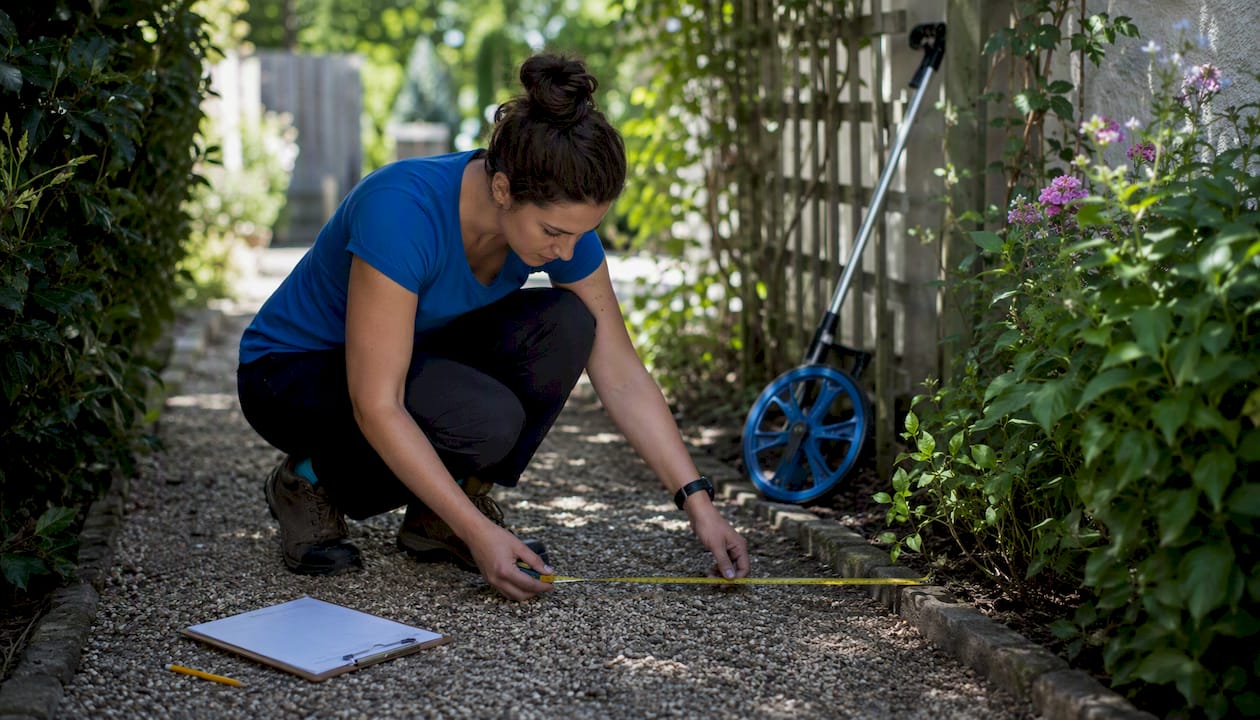
To get a fast written quote, measure your project area, note the sand type you need, take a photo of your access point, and contact a supplier with your ZIP code. San Antonio homeowners can request a delivered price directly from Olearydevelopmentgroup at olearydevelopmentgroup.com.
What does sand delivery cost per ton and per cubic yard?
Unit prices vary more than most people expect, mostly because “sand” covers a wide range of materials with very different processing costs.
Sand Category
Per Ton
Per Cubic Yard
Covers (approx.)
Fill sand (bulk)
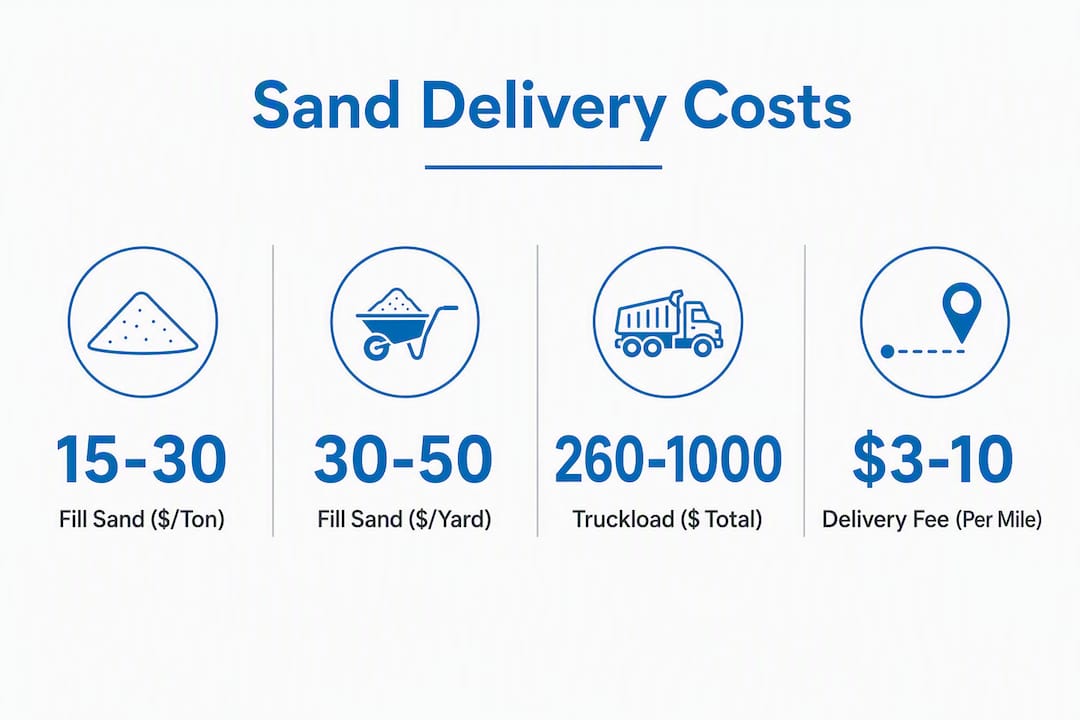
$15–$30
$30–$50
Grading, base fill, drainage
Concrete/contractor sand
$25–$30
$40–$50
Concrete mixes, paving base
Mason/mortar sand
$30–$50
$45–$70
Brickwork, mortar, tile setting
Play/beach sand
$35–$55
$50–$75
Sandboxes, volleyball courts
Specialty/decorative sand
$50–$100+
$75–$150
Colored, silica-rich, finish work
A standard delivered truckload runs $260–$1,000 depending on load size, sand type, and distance. Most residential jobs use a 10–12 cubic yard load, which is the typical capacity of a full-size dump truck.
Worked examples for common project sizes
Small patch or sandbox (1–2 cubic yards): At $50/yd for fill sand plus a $75 local delivery fee, you’re looking at roughly $175–$200 total. Small loads often carry a higher per-yard cost because the flat delivery fee doesn’t spread across much material.
Standard residential project (3–8 cubic yards / 3–10 tons): A mid-range concrete sand order at $55/yd for 5 yards plus a $100 delivery fee comes to about $375. That’s squarely in the national average range.
Driveway or large fill job (10–15 cubic yards / 8–18 tons): A full truckload of fill sand at $40/yd for 12 yards plus a $125 delivery fee totals around $605. Per-yard cost drops noticeably at this volume.
Unit conversion quick-chart
Quick calculation example: You need to cover a 10 ft × 12 ft area 3 inches deep. That’s 10 × 12 × (3/12) = 30 cubic feet. Divide by 27 to get cubic yards: 30 ÷ 27 = 1.1 cubic yards. At a typical density of 1.1 tons per yard, that’s about 1.2 tons of sand.
What determines your sand delivery cost?
Suppliers price deliveries differently — some by the hour, some by the mile, some as a flat load fee — so understanding each driver helps you compare quotes on equal footing.
Primary cost drivers:
Sand type and processing: Washed, graded, or specialty sands require more handling and carry higher per-ton prices than raw fill sand.
Order volume: Bulk orders lower your per-unit cost. Small deliveries are more expensive per yard because a flat delivery fee gets divided across fewer yards.
Delivery distance: Most suppliers charge a base fee within a local radius, then add $3–$10 per mile beyond it. A 40-mile haul can add $150–$300 to a quote that looked reasonable at first glance.
Truck size and minimums: Full-size dump trucks carry 10–14 yards; smaller trucks carry 5–8 yards. Minimum-order requirements often apply, and ordering below the minimum triggers a surcharge.
Secondary drivers that catch people off guard:
Site access and tipping location: If a standard dump truck can’t reach your intended drop spot due to a low gate, soft ground, or a narrow driveway, the supplier may need a smaller vehicle or extra offloading equipment, typically adding $50–$200.
Labor for spreading or grading: Unloading and spreading by hand runs $30–$60 per hour; skid steer spreading costs $75–$150 per hour. Full install (delivery, spread, and grade) often runs $500–$1,500 or more.
Street placement permits: Placing a load on a public street or curb requires a municipal permit in many cities. Budget $25–$100 for this if your site has no direct driveway access.
Fuel surcharges: Diesel prices fluctuate, and many suppliers pass that cost through as a line item. Ask whether the quoted price is fuel-inclusive.
Seasonal demand: Spring and early summer are peak construction months. Prices and lead times both tend to rise during high-demand periods.
Pro Tip:Before you book, ask the supplier in writing exactly what the delivery fee covers: does it include tailgate unloading only, or does the driver spread the material? Get the answer in writing, not just verbally.
Which sand type is right for your job, and what does each cost?
Picking the wrong sand is one of the more expensive mistakes a homeowner can make. Using low-cost fill sand for masonry or structural work can cause failure that requires full replacement, which costs far more than the premium you saved upfront.
A few practical notes: fill sand is the least expensive option and works well for bulk grading and drainage, but it’s too coarse and inconsistent for mortar or concrete mixes. Mason sand is finely graded and clean, which is why it costs more. Concrete sand (also called C-sand or manufactured sand) is angular and coarser, giving concrete mixes the grip they need. Play sand is washed and rounded, making it safe for kids but useless as a structural base.
How do you calculate how much sand you need?
The standard formula is straightforward: multiply your area (in square feet) by your depth (in feet), then divide by 27 to get cubic yards.
Ready to Order?
Call Now: 210-983-8005
Same-day delivery available on most orders in San Antonio and surrounding cities
For an irregular shape, break it into rectangles, calculate each section separately, and add them together.
Ordering checklist
Add 5–10% to your calculated volume to account for compaction and settling.
Confirm the sand type with your supplier and ask for the product’s dry density (lbs per cubic yard) so your ton estimate is accurate.
Note whether the sand will be compacted (compacted material fills less volume than loose material).
Write the intended use on your order form — suppliers can flag if the product you’ve chosen isn’t suited to that application.
Ask about moisture content; wet sand weighs more per yard, which affects both your ton estimate and the truck’s payload limit.
Pro Tip:Order slightly more than your calculation suggests. Running short and scheduling a second delivery almost always costs more per yard than ordering a little extra the first time.
What does a truckload of sand cost, and how are delivery fees structured?
“Truckload” means different things depending on the supplier and vehicle. Here’s what the common truck types actually carry and what a delivered drop typically costs.
Truck Type
Capacity
Typical Delivered Price (local)
Small dump truck
5–8 cu yd
$200–$650
Mid-size dump truck
8–10 cu yd
$300–$650
Full-size dump truck
10–14 cu yd
$400–$1,000
Most residential sand deliveries use a full-size dump truck carrying 10–12 cubic yards. That’s the load size most suppliers treat as a standard truckload, and it’s the most cost-efficient option per yard.
How delivery fees are structured
Flat base fee: A fixed charge for any delivery within a set radius (often 10–15 miles). Local drops typically run $50–$150.
Per-mile surcharge: Beyond the base radius, suppliers add $3–$10 per mile. A 25-mile delivery could add $75–$250 on top of the base fee.
Hourly waiting charge: If your site isn’t ready when the truck arrives, many suppliers charge $75–$150 per hour for waiting time. Have your staging area clear before the truck shows up.
Equipment or access surcharge: When a standard truck can’t reach the dump spot, a smaller vehicle or extra equipment adds $50–$200.
When to consolidate or split deliveries
If you need sand for multiple areas of a property, consolidating into one delivery almost always saves money. The flat delivery fee is fixed whether you order 5 yards or 12, so filling the truck makes each yard cheaper. Conversely, if your project is genuinely small (under 2 yards), pickup from a local supplier with a trailer can be cheaper than paying a delivery minimum.
Smart ways to lower your sand delivery bill
A few planning decisions made before you call a supplier can meaningfully cut your total cost.
Order a full truckload when practical. The delivery fee is largely fixed, so spreading it across 12 yards instead of 4 cuts your per-yard delivery cost by two-thirds.
Time your order outside peak months. Spring and early summer bring higher demand, tighter schedules, and occasional surcharges. Late summer and fall often mean faster lead times and more competitive pricing.
Prep your site before the truck arrives. Clear the staging area, confirm the dump spot, remove any gate or height obstacles, and have someone on-site to direct the driver. Waiting-time charges add up fast.
Confirm permit requirements early. If your drop location is near a public street, check with your city whether a curb permit is required. The $25–$100 permit fee is manageable; the delay from not having one is not.
Compare per-unit pricing across load sizes. Ask suppliers for pricing at 5, 10, and 14 yards. The per-yard price often drops at volume thresholds, and that information is rarely volunteered upfront.
Choose the right sand type for the job. Paying for fill sand when you need mason sand is a false economy. Structural or finish failures cost far more to fix than the premium you saved.
Pro Tip:If you’re a contractor or plan multiple deliveries over a season, ask about a contractor account or volume pricing. Many suppliers offer net-30 invoicing and per-load discounts for repeat customers — but you have to ask.
Bulk orders consistently lower per-unit cost, and small deliveries carry higher per-yard costs because the flat delivery fee doesn’t scale down with the load size.
What should you ask a supplier before getting a written quote?
Getting multiple written quotes is the only reliable way to compare sand delivery pricing, because suppliers quote differently — some by the hour, some by the mile, some as a flat load fee. A verbal ballpark is not a quote.
What to provide the supplier:
Full service address and ZIP code
Sand type and grade (fill, concrete, mason, play, etc.)
Estimated cubic yards or tons needed
Photos of your access point and intended dump location
Any gate height, weight, or surface restrictions
Preferred delivery window and flexibility
Questions to ask every supplier:
What is the itemized material cost vs. the delivery fee?
Is the delivery fee flat, per-mile, or hourly?
Are there minimum-order requirements or small-load surcharges?
Who is responsible for street placement permits?
Does the price include tailgate unloading, or is spreading extra?
What is the lead time, and what are the cancellation terms?
What a solid written quote should include:
Material type and grade
Price per ton or per cubic yard
Total material cost
Delivery fee (with distance or radius specified)
Any access, equipment, or permit fees
Estimated delivery date and time window
Total delivered price
Red flags to watch for: A quote with no distance detail, a supplier who won’t provide a written estimate before arrival, or a price that bundles material and delivery into a single number with no breakdown. Any of those makes it impossible to compare quotes fairly.
How Olearydevelopmentgroup prices sand delivery in San Antonio
Olearydevelopmentgroup serves the Greater San Antonio area with transparent per-load pricing, GPS-tracked trucks, insured hauling, and online booking. The company’s material catalog includes Concrete Sand, Manufactured Sand, Mason Sand, and White Sand, alongside fill materials and specialty aggregates.
Schedule Delivery in Minutes
Get Your Free Quote Today
Tell us your location, access, and estimated yardage — we’ll handle the rest
A written quote from Olearydevelopmentgroup covers the material type and grade, per-ton or per-yard price, delivery fee, any access or offloading notes, and an estimated delivery window. Same-day and next-day delivery options are available for San Antonio-area projects, and the online booking system lets you request a quote with your address and material specs without a phone call.
What to expect: Olearydevelopmentgroup has delivered hundreds of loads across San Antonio and surrounding cities since 2023. The company’s sand delivery options in San Antonio cover residential, landscaping, and commercial projects, with pricing that aligns with the national ranges in this guide.
For San Antonio readers, the fastest path to an accurate delivered price is to submit your address, sand type, and estimated volume through the online booking form. You’ll get a written quote that breaks out material and delivery costs separately.
Key Takeaways
Most homeowners pay $200–$650 for delivered sand, with per-ton material costs of $15–$50 and per-cubic-yard costs of $30–$70, and the biggest cost swings come from sand type, order volume, and delivery distance.
Point
Details
National price range
Most homeowners pay $200–$650 total; per ton $15–$50, per cubic yard $30–$70.
Biggest cost driver
Sand type and order size determine per-unit cost; delivery distance and site access add the most in fees.
Truckload economics
A full 10–12 cu yd truckload costs $260–$1,000 delivered; ordering a full load cuts per-yard delivery cost significantly.
Hidden fees to budget
Street permits ($25–$100), access surcharges ($50–$200), and spreading labor ($30–$150/hr) are commonly missed.
Olearydevelopmentgroup
San Antonio homeowners can get a written, itemized sand delivery quote online with same-day/next-day options.
When does DIY pickup actually make sense?
The case for picking up sand yourself is narrower than most people assume. If you have a trailer rated for the load, a vehicle with the towing capacity, and you need fewer than 2 cubic yards, pickup from a local yard can save you the delivery fee. That’s a real saving on a small job.
Beyond that threshold, the math usually flips. A full-size dump truck moves 10–12 yards in one trip. Hauling that volume yourself means multiple trailer runs, fuel, time, and the physical work of loading and unloading. The delivery fee starts to look cheap by comparison, especially when you factor in what your Saturday afternoon is actually worth.
There’s also a safety dimension. Overloaded trailers are a genuine road hazard, and most homeowners don’t have a way to weigh their load before leaving the yard. A professional driver in an insured, GPS-tracked truck handles the weight, the route, and the liability. For any job over 2–3 yards, or any project with a tight timeline or difficult access, professional delivery is the cleaner choice.
Fast, transparent sand delivery quotes for San Antonio projects
Getting sand delivered in San Antonio doesn’t have to mean chasing three suppliers for a ballpark number. Olearydevelopmentgroup offers online booking with ZIP-based pricing, so you get a written, itemized quote without waiting for a callback.
The service covers Greater San Antonio and surrounding cities, with same-day and next-day delivery available for most residential and commercial jobs. Material options include Manufactured Sand, Concrete Sand, Mason Sand, White Sand, and specialty aggregates, all delivered by insured, GPS-tracked dump trucks with transparent per-load pricing.
Service highlights:
Written quotes that break out material cost and delivery fee separately
Insured hauling with licensed trucks
Same-day and next-day scheduling for San Antonio-area projects
Online booking with no phone call required
Contractor accounts with volume pricing available
To get started, visit the dump truck hauling and material delivery page, submit your address and material specs, and receive a written quote. No vague per-load estimates, no surprise fees.
Sources and further reading
National price figures in this guide come from the following sources. Local quotes will vary, and these averages are starting points, not guarantees.
HomeGuide: Sand Delivery Cost (2026) — primary source for per-ton, per-cubic-yard, and total homeowner cost ranges, delivery fee structures, and labor add-ons.
Angi: Sand Delivery Cost — specialty and decorative sand pricing, including the $75–$150/cu yd range for processed sands.
Always verify current pricing with at least two local suppliers before committing. National averages reflect broad market conditions; your actual delivered price depends on your ZIP code, access, and the specific material grade you need.
FAQ
How much does a truckload of sand cost delivered?
A delivered truckload of sand typically costs $260–$1,000, depending on load size (usually 10–12 cubic yards for a full-size dump truck), sand type, and distance from the supplier.
How much does 100 lbs of sand cost?
At typical retail or small-order pricing, 100 lbs of sand costs roughly $5–$15, though buying in bulk by the ton or cubic yard is far cheaper per pound for any project larger than a sandbox.
How much does 300 lbs of sand cost?
Three hundred pounds is about 0.15 cubic yards. At typical delivered bulk rates, small quantities tend to carry a minimum delivery fee of $50–$150, so small orders are relatively expensive compared to bulk pricing.
How much does 1,000 lbs of sand cost?
One thousand pounds is roughly half a ton. At $15–$50 per ton for material, that’s $8–$25 in sand cost, plus delivery. Most suppliers have a minimum order, so a half-ton delivery will still carry a full local delivery fee of $50–$150.
How long does it take from ordering sand to delivery?
Most local suppliers offer next-day delivery for standard orders, and same-day delivery is available from some providers, including Olearydevelopmentgroup for San Antonio-area projects. Lead times stretch to 2–5 days during peak spring and summer construction months.