Crushed Stone vs Gravel: Which to Pick for Your Project
O'Leary Development GroupAugust 8, 2026
Learn the key differences in crushed stone vs gravel. Find out which option suits your project's needs for durability or drainage.
San Antonio’s Go-To Material Supplier
Get a Free Per-Load Quote Today
Same-day delivery available · Transparent pricing · Licensed & insured
Choose crushed stone when you need a stable, compacted surface. Choose natural gravel when drainage speed or decorative appearance is the priority. That single rule covers most homeowner decisions, but the details matter when you’re ordering by the ton and paying for delivery.
Here’s the quick version:
Load-bearing and driveways: Crushed stone, specifically crusher run or #57 stone, compacts into a rut-resistant surface that lasts many years with minimal resurfacing.
Drainage layers and French drains: Natural gravel or open-graded #57 stone moves water vertically faster than compacted material.
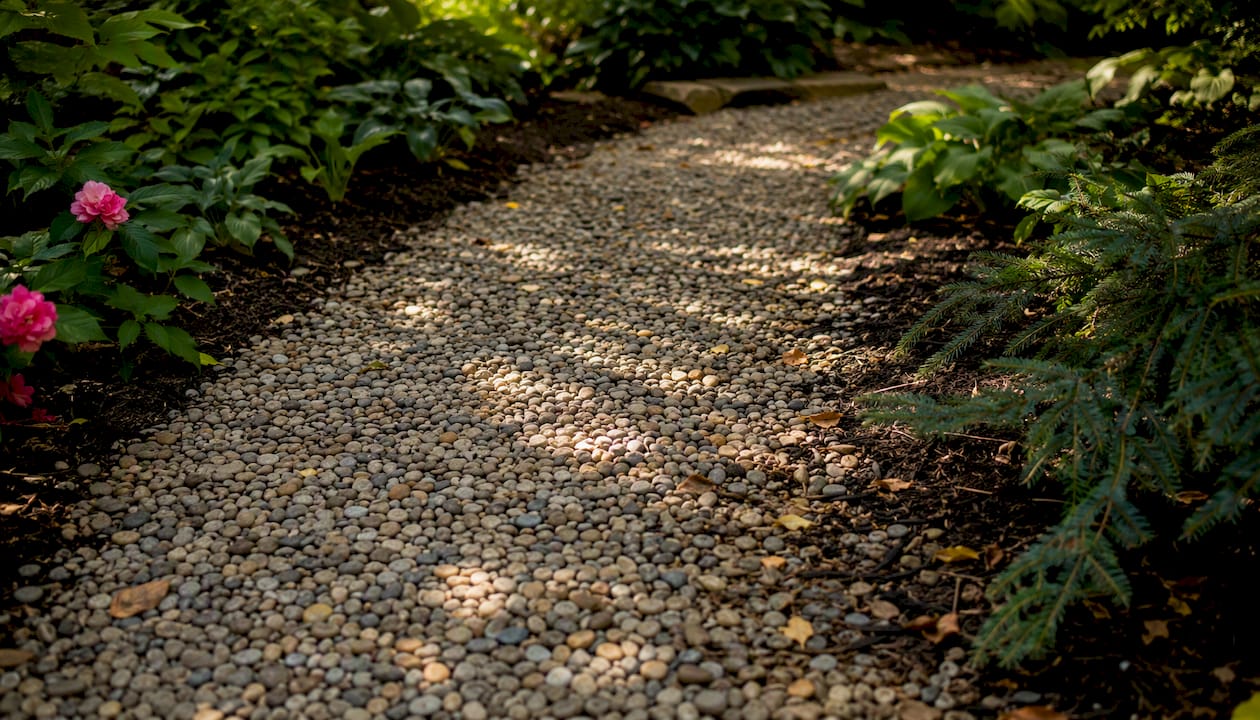
Decorative beds and pathways: Natural pea gravel or river rock, both rounded and visually smooth, work best here.
Best of both worlds: Layer #57 stone below for drainage relief, then crusher run on top for a firm, stable surface.
Key Takeaways
Crushed stone is the right choice for load-bearing, structural, and driveway applications; natural gravel suits drainage layers, decorative beds, and pathways where appearance and permeability matter most.
Point
Details
Material choice by use
Use crushed stone for driveways, paver bases, and sub-bases; use gravel for drainage, decorative beds, and pathways.
Layered design wins
Combining #57 stone below and crusher run above produces longer service life than any single-material section.
Maintenance gap
Crushed stone driveways need periodic regrading every several years; natural gravel surfaces need more frequent topping-up.
Order with a buffer
Always add 10–15% to your calculated quantity to account for compaction loss and future topping-up.
Olearydevelopmentgroup delivery
Olearydevelopmentgroup delivers bulk crushed stone, gravel, and road base to San Antonio-area projects with same-day and next-day options.
How crushed stone and gravel actually differ in shape and texture
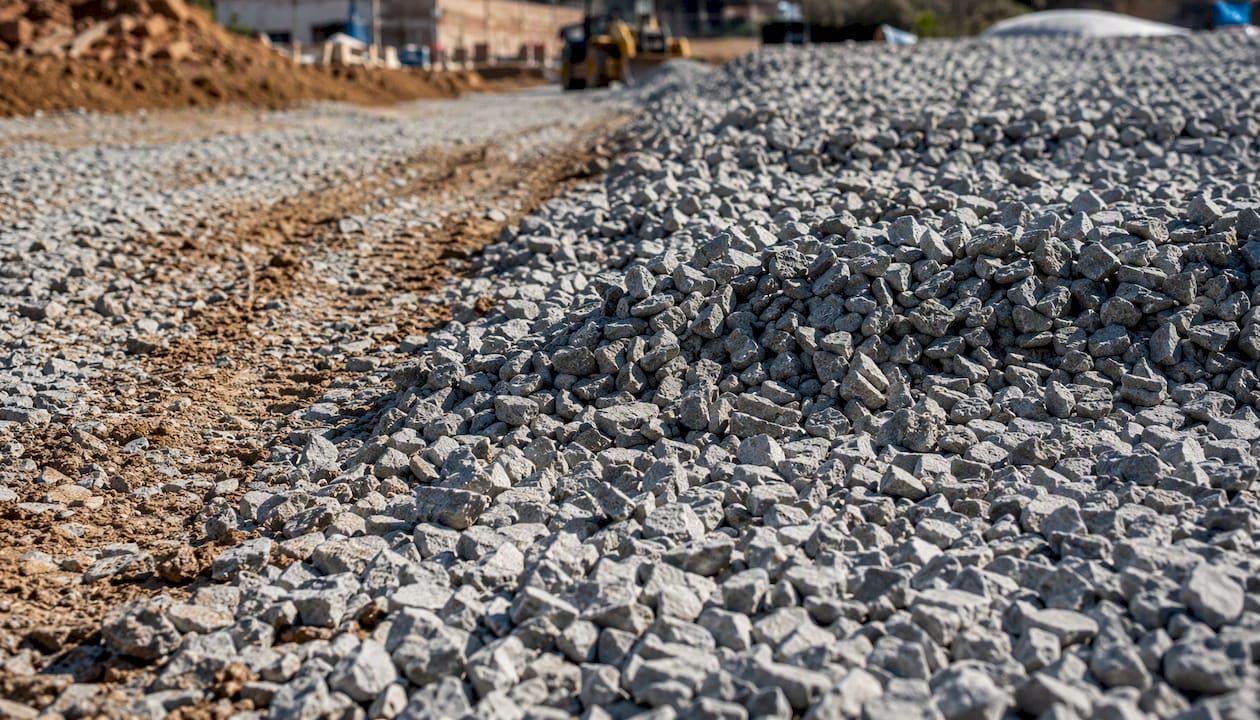
The physical difference is visible the moment you pick up a handful. Crushed stone has sharp, angular faces and fractured edges because it’s mechanically broken from quarried rock. Those edges lock together under load, which is exactly why the material compacts so well. Natural gravel is rounded and smooth, shaped by centuries of water erosion in rivers and lake beds.
Common sizes and grades you’ll see at a supplier:
3/4" washed gravel: — Natural rounded stone, cleaned of fines. Good drainage, poor compaction.
Particle shape is the single biggest predictor of how an aggregate will perform under load. Angular particles interlock; rounded ones roll. That’s the entire engineering argument for crushed stone in structural applications.
Pro Tip:When you visit a supplier or receive a delivery, run a handful of material through your fingers. If the particles are gritty and angular with visible fracture faces, it’s crushed stone. If they’re smooth and roll easily, it’s natural gravel. Misidentifying the material at delivery is one of the most common and costly mistakes on small projects.
Where each material comes from and how it’s made
Gravel forms naturally through weathering and erosion, typically deposited in riverbeds, glacial outwash plains, and lake shores. The water action rounds and sorts the particles over time. Common rock types include limestone, granite, and quartzite, each producing slightly different colors and hardness levels.
Crushed stone is manufactured by quarrying solid rock, then mechanically crushing and screening it to specific size grades. The quarrying process allows tight control over gradation and particle size. Common source rocks include limestone, basalt, granite, and trap rock. Because the process is controlled, crushed stone is more consistent in size and grading than naturally deposited gravel.
Key production differences that affect your project:
Crushed stone includes fines (stone dust) in some grades like crusher run, which is what allows dense compaction.
Natural gravel is often washed to remove clay and silt, improving drainage but eliminating the fines that aid compaction.
Crushed limestone, a common variant in Texas, tends to be lighter in color and slightly softer than granite-based crushed stone.
For a standard residential driveway, the typical layered approach uses road base or crusher run as the compacted sub-base (4–6 inches), then #57 stone or crusher run as the surface layer (2–3 inches). Each layer serves a different job, and substituting one for the other is where most DIY projects go wrong.
Driveways: Crushed stone is the clear choice. Its angular particles lock together under compaction, producing a surface that resists rutting under vehicle traffic. Natural gravel shifts and migrates, especially on slopes, requiring more frequent regrading.
Paver base: Always crushed stone, specifically crusher run or #57. The angular interlocking particles create a stable, non-shifting foundation. Rounded gravel under pavers leads to settlement and cracking.
French drains and drainage trenches: Open-graded #3 or #57 stone, or clean washed gravel. You need void space for water to move through, not fines that clog the system.
Decorative beds and pathways:Pea gravel or river rock. The smooth, rounded texture looks clean in landscape beds and is comfortable underfoot on garden paths.
Retaining wall backfill: #57 stone or clean crushed stone. Good drainage behind the wall prevents hydrostatic pressure buildup.
Ready to Order?
Call Now: 210-983-8005
Same-day delivery available on most orders in San Antonio and surrounding cities
Erosion control on slopes: Larger crushed stone or bull rock works better than gravel because angular pieces resist downslope migration.
Feature
Crushed Stone
Natural Gravel
Particle shape
Angular, fractured
Rounded, smooth
Origin
Quarried and mechanically crushed
Naturally weathered
Best uses
Driveways, paver base, sub-base
Drainage, decorative, pathways
Stability / compaction
Excellent; interlocks under load
Poor; particles roll and migrate
Drainage
Good when open-graded; less when compacted
Fast vertical drainage when clean
Appearance
Gray, rough, industrial
Varied colors, smooth, natural look
Maintenance
Lower; regrading every 5–10 years
Higher; topping-up every 2–3 years
How each material handles water and long-term traffic
Void space is what determines drainage performance. Clean, open-graded gravel or #57 stone has roughly 30–40% void space, allowing water to move through quickly. Compacted crusher run has much lower void space because the fines fill the gaps, which is what makes it stable but slower to drain.
Key performance differences under real conditions:
On flat or low-slope sites, compacted crushed stone drains adequately for most residential applications.
On slopes steeper than 5%, loose gravel migrates downhill under traffic and rain. Crushed stone with fines holds position better.
Under heavy vehicle traffic, natural gravel develops ruts and washboard patterns faster than compacted crushed stone.
Crushed stone compacts into a stable, rut-resistant driveway surface and usually costs less to own over the driveway’s service life; natural gravel requires more frequent topping-up and maintenance. That lifecycle cost difference is what most homeowners miss when comparing initial prices.
What each material costs and what maintenance looks like
Prices vary by region, rock type, and delivery distance. These are general U.S. ranges for bulk delivery.
Crushed stone typically costs slightly more per ton than natural gravel, but the maintenance gap closes that difference over time. A gravel driveway that needs topping-up every two years adds up faster than a crushed stone surface that holds for a decade. For a 1,000-square-foot driveway, the difference in lifetime cost can be significant over a 15-year period.
Check per-load pricing before you finalize your budget, since delivery fees and minimum load sizes affect the real cost per project.
How to calculate quantities and order correctly
Getting the math right before you call a supplier saves you from a short delivery or an expensive second truck.
Determine depth. Convert inches to feet: 4 inches = 0.33 ft; 6 inches = 0.5 ft.
Calculate cubic feet. Square footage × depth in feet.
Convert to cubic yards. Divide cubic feet by 27.
Convert to tons (optional). Multiply cubic yards by 1.4 for crushed stone or 1.35 for gravel (approximate bulk densities).
Add 10–15% waste factor. Always order extra for compaction loss, edge waste, and future topping-up.
Example: A 200 ft × 12 ft driveway at 4-inch depth = 2,400 sq ft × 0.33 ft = 792 cubic feet ÷ 27 = 29.3 cubic yards. Add 15% = approximately 34 cubic yards, or roughly 47 tons of crushed stone.
When you call or book online, tell your supplier:
Exact grade name (#57, crusher run, pea gravel)
Quantity in cubic yards or tons
Delivery address and any access restrictions (low-hanging wires, soft ground, narrow gates)
Preferred drop location on site
Whether you need a tailgate spread or a single pile
Pro Tip:Ask the driver to inspect the delivered material before they leave. Check that the grade matches your order, the material is clean and free of clay contamination, and the color is consistent. Contaminated aggregate is a common quality issue, especially with natural gravel.
Environmental and sustainability considerations
Both materials carry an environmental footprint, but the specifics differ. Quarrying crushed stone requires blasting, heavy equipment, and significant energy for crushing and screening. Natural gravel extraction from riverbeds and glacial deposits is less energy-intensive but can disrupt aquatic habitats if not managed carefully.
Recycled crushed concrete (RCA) is a growing alternative that performs similarly to virgin crushed stone for sub-base and base applications. It’s often cheaper, diverts demolition waste from landfills, and is widely available in urban markets. For decorative applications, recycled glass aggregate is another option gaining traction in landscape design.
Locally sourced aggregate, whether crushed limestone from a nearby quarry or regional river gravel, reduces transportation emissions and often costs less than material shipped long distances. In Texas, crushed limestone is abundant and typically the most cost-effective and environmentally sensible choice for most projects.
How climate and soil conditions affect your material choice
Soil type and local climate should influence your aggregate selection as much as the project type does.
In areas with expansive clay soils, common across much of central Texas, a geotextile separation layer is non-negotiable. Clay expands when wet and contracts when dry, and without separation, it pumps up into your aggregate layer and destroys drainage performance within a few seasons.
In freeze-thaw climates, the frost heave cycle can push aggregate out of position. Crushed stone with fines compacts tightly enough to resist heave better than loose gravel. In warmer, drier climates like San Antonio, the bigger concern is surface migration from wind and occasional heavy rain events, where angular crushed stone again outperforms rounded gravel.
High-rainfall regions benefit from open-graded aggregate in drainage-critical applications. If your site has poor natural drainage or sits in a low area, prioritize void space over compaction in your aggregate selection.
Choosing aggregate for decorative and aesthetic uses
When the project is a garden bed, a backyard pathway, or a pool surround, appearance matters as much as performance. This is where natural gravel earns its place.
Pea gravel is the most popular decorative aggregate in residential landscaping. Its smooth, rounded texture in tan, brown, and gray tones looks natural in garden settings and is comfortable underfoot. River rock in larger sizes (1"–3") works well as a mulch substitute in low-water landscaping, suppressing weeds while allowing rainfall to reach plant roots.
Schedule Delivery in Minutes
Get Your Free Quote Today
Tell us your location, access, and estimated yardage — we’ll handle the rest
Crushed stone in decorative applications tends to look more industrial. Gray angular stone suits modern or minimalist designs but can feel harsh in traditional garden settings. Crushed limestone in lighter cream or tan tones is a middle ground, offering some visual warmth with better compaction than rounded gravel.
For color variety, decomposed granite (DG) is a fine-textured crushed material that packs into a firm, natural-looking surface in warm gold and rust tones. It’s popular for pathways and patios in dry climates and compacts well enough for light foot traffic.
The case for getting the layers right from the start
The conventional wisdom on aggregate projects is to pick one material and use it throughout. Most homeowners choose gravel because it’s familiar, and most contractors default to crusher run because it’s easy to compact. Both approaches miss the point.
The engineering argument for layered design is straightforward: no single aggregate solves both drainage and surface stability simultaneously. Open-graded material drains well but shifts. Dense-graded material compacts well but restricts vertical water movement. The only way to get both is to use both, in the right sequence.
What I see consistently is that projects built with a proper layered section, geotextile on the subgrade, open-graded stone for drainage relief, and dense-graded crusher run on top, outlast single-material driveways by years. The upfront cost difference is modest. The maintenance savings are real.
The other underestimated factor is edge restraint. Gravel without edging is a temporary surface. It looks fine for a season, then migrates into the lawn, thins in the center, and needs topping-up constantly. A proper steel or concrete edge costs a fraction of the material cost and doubles the effective life of any loose aggregate surface.
If you’re planning a project in the San Antonio area, the material selection conversation is worth having before you order. Getting the grade right the first time is far cheaper than correcting a failed base.
Get your crushed stone or gravel delivered to your San Antonio project
Knowing which material to order is half the job. Getting it to your site on time, in the right quantity, is the other half.
Olearydevelopmentgroup delivers bulk crushed stone, crusher run, #57 stone, pea gravel, road base, and specialty aggregate directly to construction and landscaping sites across Greater San Antonio and surrounding cities. Same-day and next-day delivery options are available, with GPS-tracked trucks and transparent per-load pricing so you know exactly what you’re paying before the truck rolls.
Before you request a quote, have your grade name, estimated cubic yards or tons, and site access details ready. The online booking system makes it straightforward. For larger contractor accounts, net-30 invoicing is available.
Natural gravel typically costs slightly less per ton up front, but crushed stone usually costs less over time because it needs far less maintenance. Gravel driveways often require topping-up every 2–3 years; crushed stone surfaces typically hold for 5–10 years before regrading.
Is 3/4" crushed stone the same as gravel?
No. 3/4" crushed stone (#57) is mechanically produced with angular, fractured faces that compact and interlock. Natural 3/4" gravel is rounded and smooth from water erosion. They share a similar size but perform very differently under load and compaction.
Does crushed stone need to be compacted?
Yes. Crushed stone, especially crusher run, must be compacted in lifts using a plate compactor or roller to achieve its rated stability and surface life. Skipping compaction leaves soft spots that rut quickly under vehicle traffic.
What does crushed stone look like?
Crushed stone has sharp, angular edges with visible fracture faces, typically gray, tan, or off-white depending on the source rock. It looks rough and industrial compared to the smooth, rounded appearance of natural gravel. Crushed limestone, common in Texas, tends toward a lighter cream or gray tone.
When should you use pea gravel instead of crushed stone?
Use pea gravel for decorative landscape beds, garden pathways, and drainage blankets where appearance and permeability matter more than compaction. Never use pea gravel as a base layer under pavers or in a load-bearing driveway application.