Discover how much topsoil for sod you really need and how to prepare your soil for successful turf growth. Get expert tips now!
San Antonio’s Go-To Material Supplier
Get a Free Per-Load Quote Today
Same-day delivery available · Transparent pricing · Licensed & insured
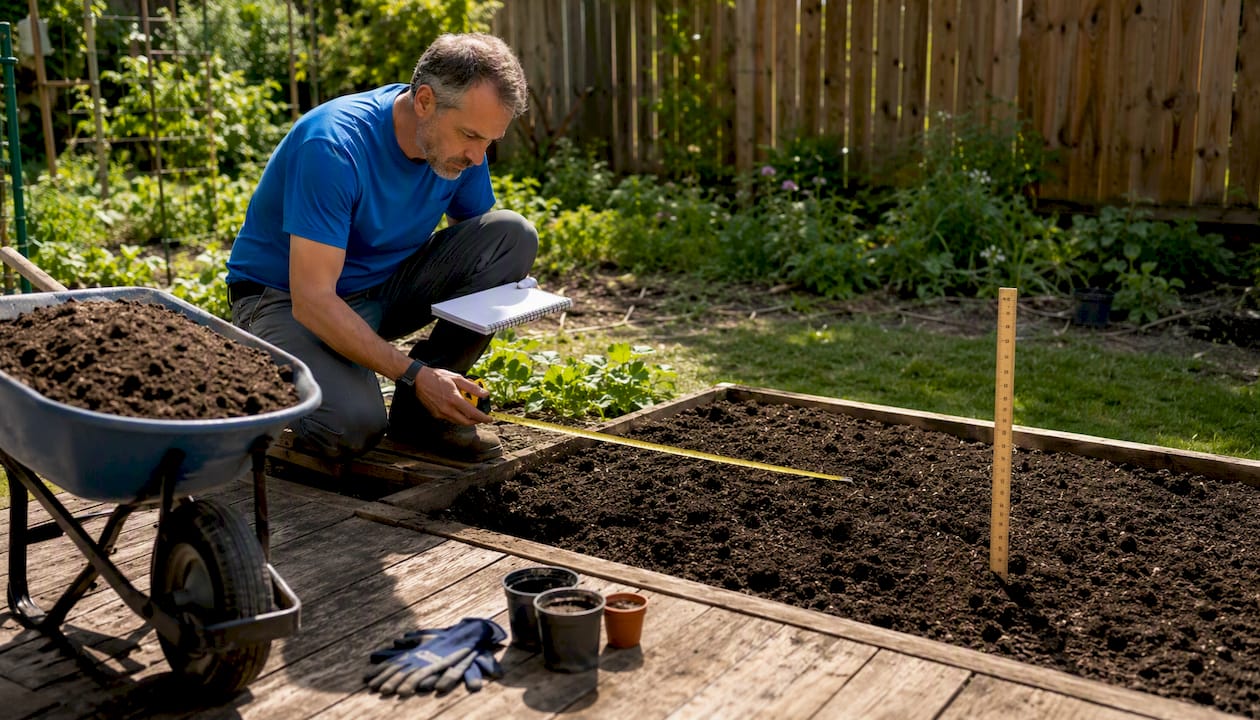
Most sod installations need a total workable root zone of good soil sufficient for sod establishment. In practice, that usually means spreading roughly 3 inches of quality, screened topsoil and tilling it into your existing ground rather than just laying it on top. This creates a total root zone of 4–6 inches once blended with the loosened native soil, as recommended by university extension services. Before you order a single cubic yard, though, do one thing first: confirm your existing soil is loose, loamy, and not compacted. A basic soil test from your local cooperative extension office costs very little and tells you whether you need amendments, how much organic matter is already present, and whether your pH is in the right range. Skip that step and you may add topsoil you don’t need, or worse, miss a problem that kills your sod within weeks.
The formula is straightforward. Multiply your area in square feet by your target depth in inches, then divide by 324. That 324 constant converts the result directly into cubic yards (since one cubic yard equals 27 cubic feet, and 12 inches per foot gives you 27 × 12 = 324).
Common conversion guidance puts this at roughly 3 cubic yards per 1,000 sq ft per inch of coverage. Three inches of topsoil over 1,000 sq ft therefore requires a moderate volume before any settling allowance.
Worked examples at common depths
Always add a small percentage to your calculated total to account for settling and minor grade adjustments. For 3 inches of topsoil over 1,000 sq ft, you will need roughly 9 cubic yards before settling allowance (as standard conversion guidance states); plan to add 10–15% to that base figure for grade adjustments and settling.
Truck-load sizing: A standard dump truck typically carries a substantial volume per load, varying by configuration. A 1,000 sq ft project at 3 inches of topsoil fits comfortably in a single load, with room for the settling buffer. Larger yards, say 2,500–3,000 sq ft, will likely need two loads. Confirm the exact load capacity with your hauler before scheduling, since truck configurations vary.
For metric users: 1 cubic yard equals approximately 0.765 cubic meters. Multiply your cubic-yard total by 0.765 to convert.
What type of topsoil works best under sod?
Not all topsoil is the same product. The label “topsoil” on a bulk order can mean anything from rich, screened loam to reprocessed construction fill. University of Missouri Extension sets clear quality thresholds: ideal topsoil has a suitable pH in the moderate range, a loamy texture, and organic matter content at a level supportive of healthy plant growth.
Here is how the common options stack up:
Screened topsoil (sandy loam or silty loam): — The standard choice. Screened through at least a 3/4-inch mesh to remove rocks, roots, and clumps. Drains well, supports root penetration, and blends cleanly with native soil. This is what most turf producers and extension services recommend.
Topsoil/compost blends (70/30 or 80/20 mix): A step up in organic matter. The compost fraction improves water retention and microbial activity. A Four Way Compost or Three Way Mix product works well here, especially on sandy or nutrient-poor native soil.
What to ask your supplier before ordering
Request the following in writing or on a product spec sheet:
Screening size (confirm 3/4-inch mesh minimum)
Organic matter percentage (target above 3%)
Source of the material (native vs. imported or processed)
Whether it is certified weed-free or heat-treated
Any visible debris, large clumps, or strong odor (ammonia smell signals uncomposted material)
When do you actually need to add topsoil before laying sod?
Three situations almost always require added topsoil. One situation lets you skip it.
New construction or stripped topsoil: Builders routinely scrape and remove the native topsoil layer during grading. What remains is typically compacted subsoil with little organic matter. Install a sufficient depth of screened topsoil and till deeply to create a workable root zone from scratch.
Compacted or heavy clay ground: Clay soil drains poorly and resists root penetration. Till the existing surface deeply, then add enough screened loam and blend the two layers together. Adding topsoil without tilling first just creates a drainage problem at the interface.
Leveling dips or reshaping the yard: Low spots collect water and create uneven sod growth. Fill and grade with topsoil before installation, then allow the area to settle briefly (a day or two) before laying sod.
When you can skip it: If your existing soil is already loose, dark, and loamy, drains well after rain, and a soil test confirms adequate organic matter and a pH in the 5.5–7.5 range, you may not need to add topsoil at all. A light till and a thin compost topdress may be sufficient. The soil test is the deciding factor here, not a visual guess.
How do you prepare the site so topsoil actually works?
Spreading topsoil on unprepared ground is one of the most common and costly mistakes in sod installation. Layering new topsoil directly over compacted subsoil creates what installers call the “teacup” or “bathtub” effect: water soaks into the loose topsoil layer but cannot drain through the hard layer beneath. Roots hit that barrier within weeks and either drown or dry out.
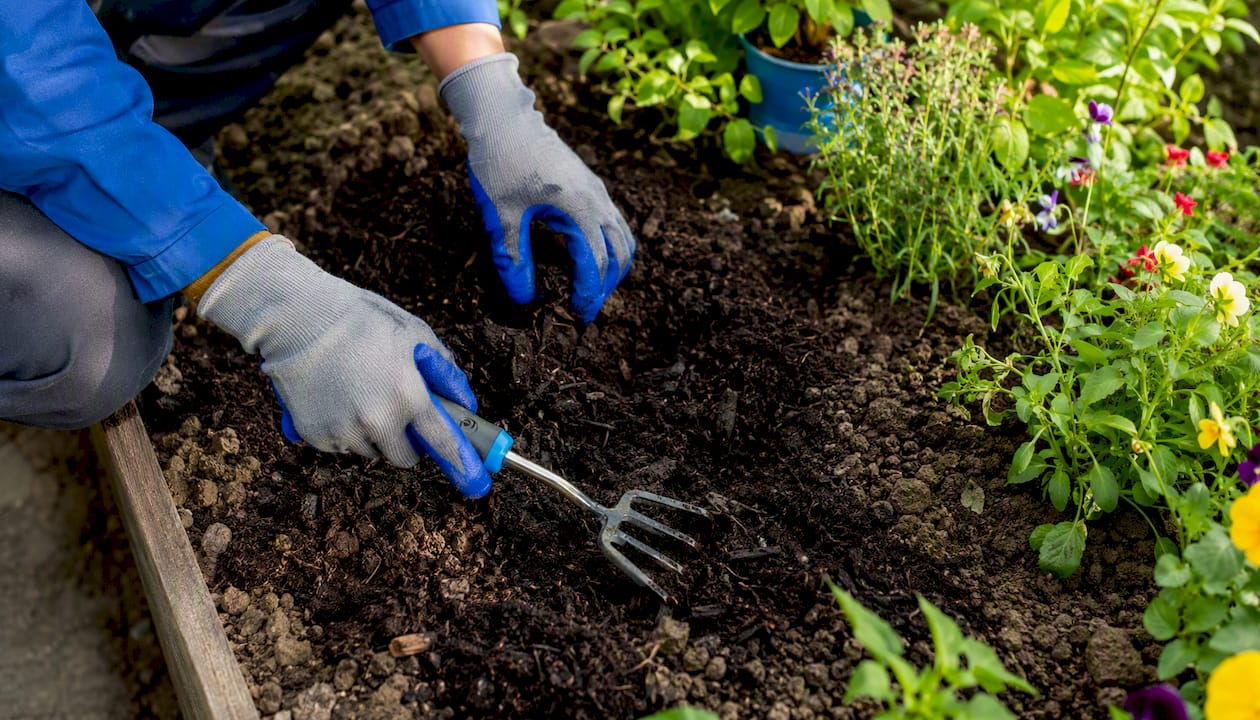
The fix is blending, not layering.
Ready to Order?
Call Now: 210-983-8005
Same-day delivery available on most orders in San Antonio and surrounding cities
Get a soil test first — Request pH, organic matter percentage, and a basic nutrient panel (phosphorus, potassium). Your county cooperative extension office can process samples for a modest fee. The test tells you whether to add lime, sulfur, or fertilizer before you ever touch a rototiller.
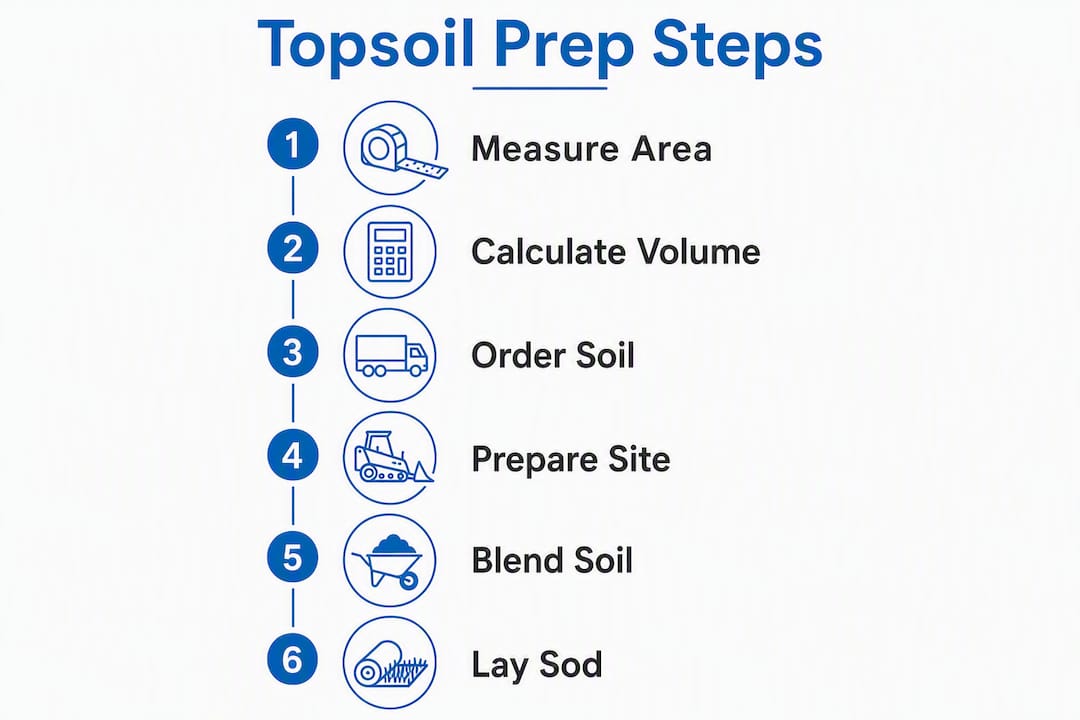
Pro Tip:Blend new topsoil at least 2–4 inches into your loosened existing soil. That overlap creates a continuous root zone with no abrupt interface. Roots that hit a sharp layer boundary fail within 3–6 weeks, usually right when the sod looks like it has taken hold.
Step-by-step: spreading, grading, and watering after sod goes down
Install day sequence
Strip or kill existing vegetation and remove debris.
Rough grade the area, sloping away from structures at roughly 1–2% grade.
Spread topsoil evenly across the prepared surface.
Till or blend topsoil into existing loosened soil (if not already done in site prep).
Final grade: smooth the surface and account for sod thickness (typically 1–2 inches) so the finished lawn sits level with adjacent hard surfaces like driveways or walkways.
Firm the surface lightly with a lawn roller to eliminate air pockets without over-compacting.
Lay sod immediately. Do not let prepared, graded soil sit exposed for more than a day or two; it dries out fast and can re-compact from foot traffic or rain.
Watering in the first four weeks
Days 1–7: Water twice daily, enough to keep the sod and the top 2 inches of soil consistently moist. Sod roots are not yet established and dry out quickly.
Days 8–14: Reduce to once daily. Check that the soil beneath the sod stays damp but not waterlogged.
Days 15–28: Transition to every other day, then to a deep, less frequent schedule as roots establish.
Cool-season grasses (fescue, bluegrass, ryegrass) establish best when laid in early fall or early spring, when soil temperatures sit between 50°F and 65°F. Warm-season grasses (Bermuda, St. Augustine, zoysia) prefer late spring through early summer, with soil temperatures above 65°F.
Signs of under-watering: sod edges curl upward, color shifts to blue-gray. Signs of over-watering: sod feels spongy, smells musty, or develops fungal patches.
What if you can’t get the full recommended depth before sod day?
Shallow topsoil is a real risk, but it is manageable if you prioritize correctly.
Focus whatever topsoil you have on the areas that need it most: low spots, compacted zones, and areas with visible clay or construction debris. A thin layer spread uniformly across the whole yard is worse than a proper depth in the critical sections. Seed instead of sod on the sections you cannot adequately prepare, then sod those areas in the next season once the soil is right.
Shallow topsoil causes shallow roots. Sod with a root zone under 2 inches will show drought stress within the first hot spell, grow unevenly, and often fail to knit together properly. That failure typically shows up 3–6 weeks after installation, when the sod looks fine on the surface but lifts easily because roots never penetrated the subsoil.
Temporary fixes that are acceptable: a thin topdress (half an inch or less) to level minor surface irregularities before laying sod. What is not acceptable: skipping tilling entirely and just dropping 1–2 inches of topsoil on hard ground. That is the teacup effect waiting to happen.
If your cubic-yard calculation comes up short and you cannot get a delivery before your sod arrives, reschedule the sod. Sod farms can usually hold an order by a week or two. The cost of a delay is far lower than replacing dead sod.
How to buy topsoil: bulk vs. bagged and what to check
For any sod project requiring 10 or more cubic yards, bulk delivery is the practical and economical choice. Bagged topsoil from a home improvement store runs significantly higher per cubic yard and introduces inconsistency when you mix bags from different batches. Bulk delivery gives you a single, consistent blend across the entire yard.
Bulk topsoil: Best for projects over 10 cubic yards. Delivered by dump truck, consistent blend, lower cost per yard. Requires site access for a truck.
Bagged topsoil: Practical only for small patches, touch-ups, or areas with no truck access. Cost-prohibitive at the volumes a typical sod install requires.
Before placing a bulk order, ask your supplier:
What is the screening size? (Confirm 3/4-inch mesh or finer.)
What is the organic matter percentage?
Where does the material come from, and is it weed-free?
Can you provide a product spec sheet or a small sample before delivery?
What is the delivery window, and do you offer same-day or next-day options?
Request a sample or a spec sheet for any large order. A supplier who cannot provide either is worth avoiding. You can also find topsoil sources and compare local options before committing.
Delivery day: what to have ready before the truck arrives
A smooth delivery saves time and protects your property. Prepare the following before the truck shows up:
Ask about spreading — Some haulers will spread material on-site. Confirm this before delivery day, not during it.
When comparing topsoil delivery options in San Antonio, ask whether the hauler offers online quotes, GPS-tracked deliveries, and same-day or next-day scheduling. Those features matter when your sod is arriving Thursday and your topsoil needs to be in place Wednesday.
What does topsoil for sod actually cost?
Topsoil pricing varies by region, screening level, organic matter content, and delivery distance. Rather than citing a ballpark that may not apply to your area, here is how to build an accurate estimate from any supplier’s quote.
Key cost drivers:
Schedule Delivery in Minutes
Get Your Free Quote Today
Tell us your location, access, and estimated yardage — we’ll handle the rest
Cubic yards required (your calculated total plus the 10–15% settling buffer)
Per-cubic-yard material price (varies by product grade and screening)
Delivery fee (often a flat charge per load or per mile beyond a base radius)
Minimum-load charges (many suppliers have a one-load minimum)
Spreading or placement fees if the driver positions material on-site
How to compare quotes: Ask every supplier for the same four numbers: per-cubic-yard price, delivery fee, minimum-load charge, and any spreading fee. Plug your cubic-yard total into each quote using this structure:
Then add 10–15% to that total as a buffer for settling and grade adjustments. Comparing quotes on this basis prevents the common mistake of choosing the lowest per-yard price while missing a high delivery fee that flips the comparison.
Key Takeaways
Aim for a 4–6 inch total root zone, blend topsoil into tilled native soil rather than layering it, and always confirm your cubic-yard total before ordering to avoid running short on install day.
Point
Details
Target depth
Aim for 4–6 inches total root zone; typically 3 inches of added screened topsoil blended into existing soil.
Volume calculation
Use Area × Depth ÷ 324 for cubic yards, then add 10–15% for settling.
Soil quality
Choose screened loam (sandy or silty) with 3%+ organic matter; avoid fill dirt, pure clay, or pure sand.
Soil test first
A basic pH and organic matter test prevents unnecessary amendments and identifies problems before sod goes down.
Olearydevelopmentgroup delivery
Olearydevelopmentgroup delivers screened bulk topsoil in the San Antonio area with same-day and next-day options and online quote requests.
The part most homeowners get wrong about soil prep
There is a gap between what the guides say and what actually causes sod to fail. Most articles focus on depth, and depth matters, but the single biggest predictor of long-term turf health is not how many inches of topsoil you add. It is whether you blended it or just stacked it.
A yard with 4 inches of beautiful screened loam sitting on top of unbroken clay will fail faster than a yard with 2.5 inches of mediocre topsoil tilled 4 inches into loosened native soil. The roots do not care how good the topsoil looks. They care whether they can grow through it into something stable below.
The other mistake that rarely gets called out: skipping the soil test because it feels like an extra step. That test is the only thing that tells you whether your existing soil is already adequate, whether your pH will lock out nutrients from your new sod, and whether you need to add anything at all before the topsoil goes down. Skipping it is not saving time. It is gambling with the cost of the sod, the topsoil, and the installation labor.
One practical shortcut worth using: spread topsoil in two passes rather than one. The first pass gets tilled in, which loosens the native soil and starts the blend. The second pass goes on top and gets tilled again. You end up with better integration, more even compaction, and a surface that grades more cleanly. It takes maybe 20 extra minutes and prevents the uneven settling that creates low spots after the first heavy rain.
Bulk topsoil delivered to your San Antonio project site
When your cubic-yard calculation is done and your install date is set, the last thing you want is a topsoil delivery that shows up late, short, or with the wrong material. Olearydevelopmentgroup delivers screened bulk topsoil across the San Antonio area with same-day and next-day options, GPS-tracked loads, and transparent per-load pricing you can confirm before the truck rolls.
To get a fast quote, have four things ready: your square footage, your target depth in inches, your site address, and any access notes (gate width, overhead clearance, driveway type). Olearydevelopmentgroup’s online booking system handles quote requests directly, and contractor accounts include net-30 invoicing for recurring projects. Whether you need a single load for a backyard install or multiple loads staged across a larger property, the dump truck hauling and material delivery service is built for exactly this kind of job. Request your quote at olearydevelopmentgroup.com and lock in your delivery before your sod arrives.
Screened sandy loam or silty loam with at least 3% organic matter and screened through a 3/4-inch mesh is the standard recommendation. Avoid fill dirt, pure clay, or pure sand, which either compact too easily or drain too fast to support sod establishment.
Is 2 inches of topsoil enough for sod?
Two inches is the minimum, and only when tilled into existing loose, loamy soil that is already in good condition. On compacted, clay, or construction-graded ground, 3–4 inches is the practical standard, and new construction sites typically need 4–6 inches.
Can you lay sod without topsoil?
Yes, if the existing soil is already quality loam: loose, dark, well-drained, and confirmed by a soil test to have adequate organic matter and a pH in the 5.5–7.5 range. On clay, sandy, or stripped construction sites, adding topsoil is necessary for the sod to establish properly.
Can you put topsoil over existing sod?
Topdressing an established lawn with a thin layer (1/4 to 1/2 inch) of topsoil or compost is a common maintenance practice. Dumping several inches of topsoil over living sod will smother it. If you are trying to level or improve an existing lawn, topdress lightly and repeatedly rather than burying the grass in a single application.