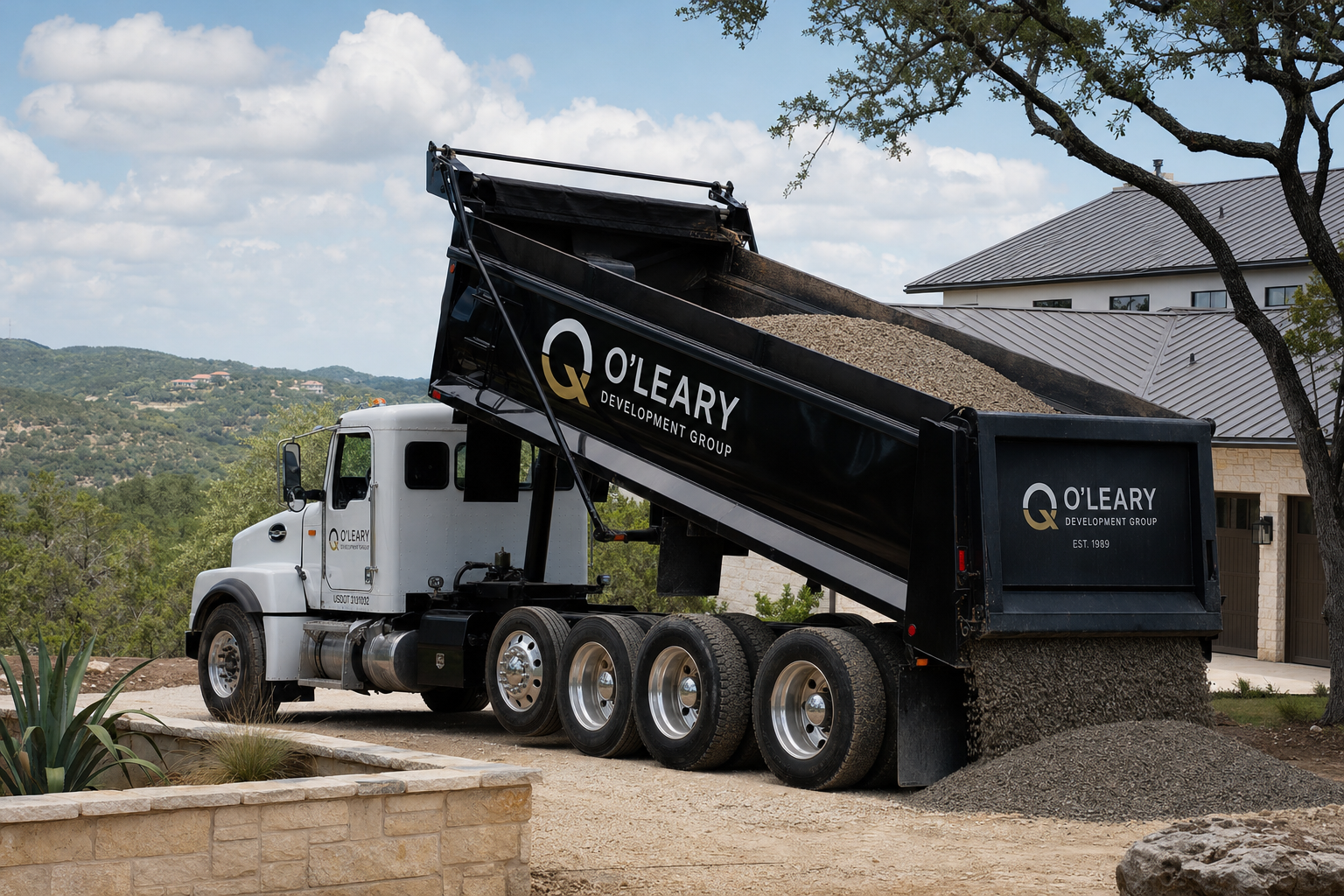
Road Base vs. Gravel: Which Should You Buy for Your Driveway?
O'Leary Development GroupOctober 15, 2026
Choosing between road base and gravel for your driveway in Central Texas depends on stability needs, drainage requirements, and long-term maintenance goals. We explain the physical differences, compaction benefits, and climate considerations to help San Antonio and Hill Country property owners make the right material decision.
San Antonio’s Go-To Material Supplier
Get a Free Per-Load Quote Today
Same-day delivery available · Transparent pricing · Licensed & insured
Road Base vs. Gravel: Which Should You Buy for Your Driveway?
When you’re planning a driveway project in San Antonio, New Braunfels, or anywhere across the Hill Country, one of the first decisions you’ll face is choosing between road base and gravel. Both materials have their place in construction and landscaping, but they serve different purposes and perform very differently over time. We work with homeowners and contractors throughout Central Texas every day, and we’ve seen firsthand how the wrong material choice can lead to washouts, ruts, and expensive repairs. In this guide, we’ll break down the real differences between road base and gravel, explain why compaction matters in our local soil conditions, and help you decide which material is right for your driveway project.
Understanding Your Options: Road Base vs. Gravel for Driveways
Let’s start with the basics. Road base and gravel might look similar when they first get dumped from our trucks, but their composition and performance characteristics are completely different. Understanding these differences is essential before you commit to a material purchase and delivery.
What Is Road Base?
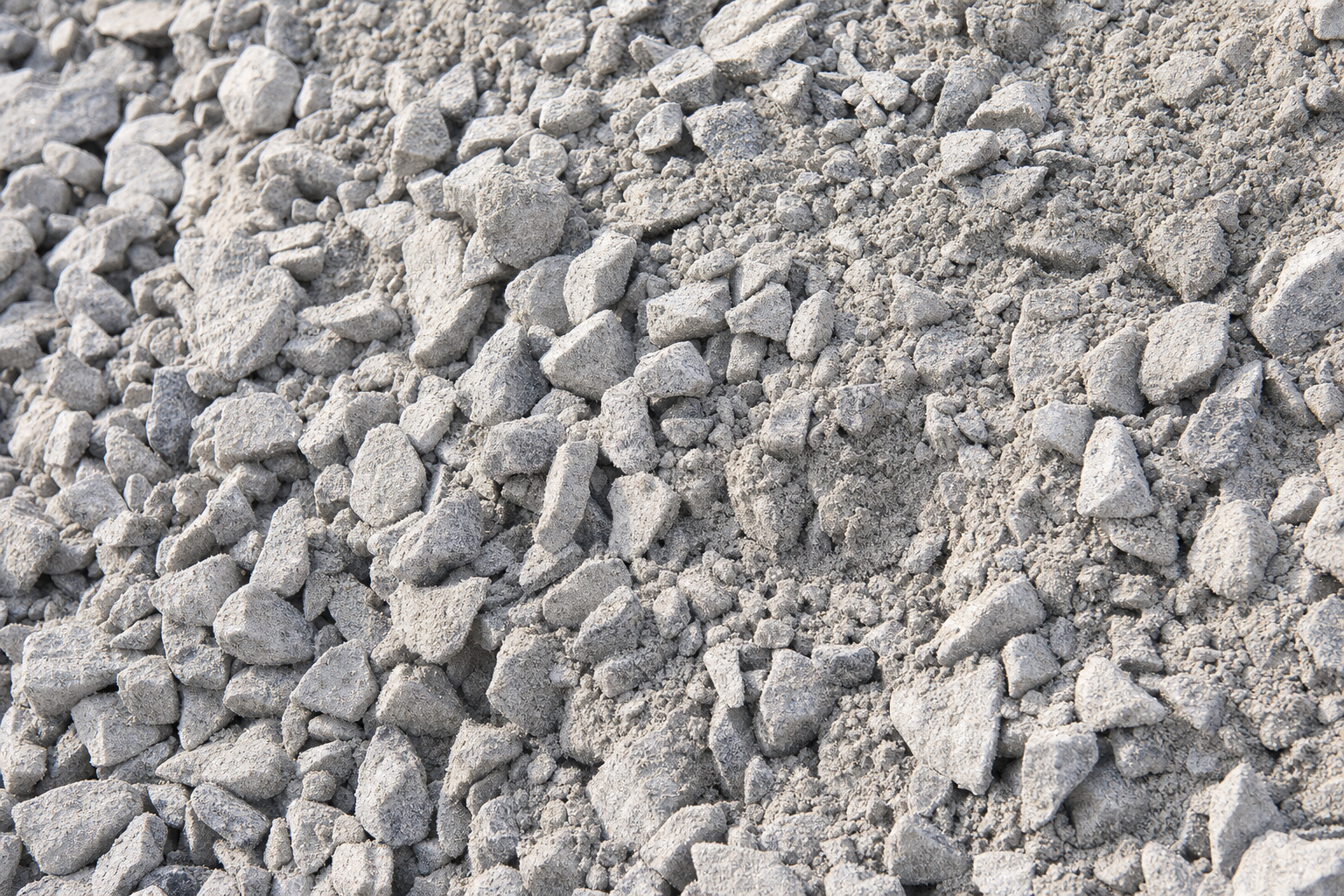
Road base is a blend of crushed stone mixed with fines—small particles and dust that fill the gaps between larger pieces. When you compact road base properly, those fines act like a binding agent. The material locks together and creates a stable, semi-solid surface that resists shifting and spreading. We deliver several types of road base across Central Texas, including #2 road base, 3/4″ road base, and flexible base. Each type has a slightly different gradation, but they all share that critical characteristic: they contain fines that allow compaction and binding.
What Is Gravel?
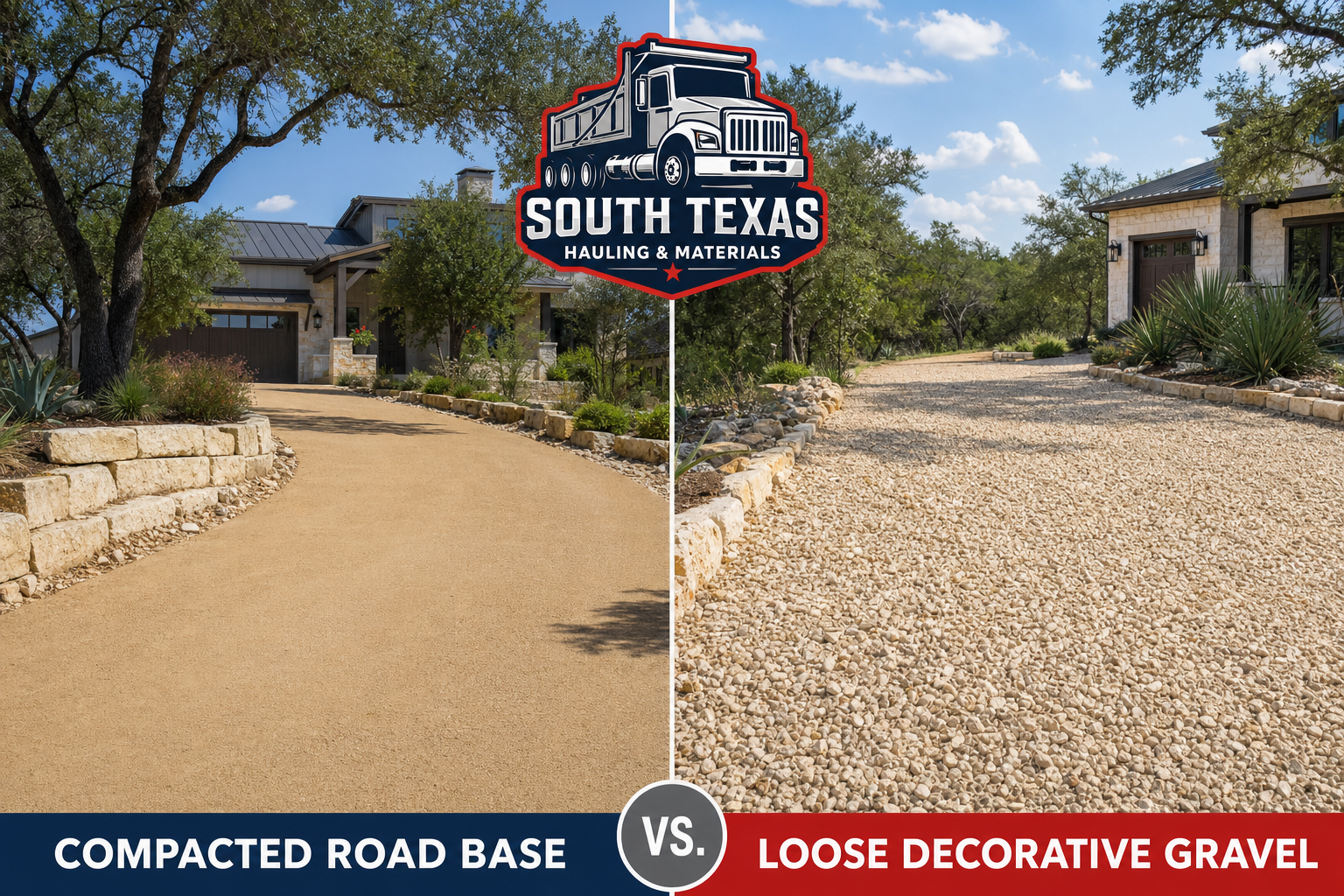
Gravel, on the other hand, is clean stone without fines. You’ll often hear it called “clean rock” or “washed gravel.” The individual stones are uniform in size and don’t contain dust or smaller particles. Because there’s nothing to bind the stones together, gravel stays loose. It shifts under vehicle weight, spreads outward over time, and doesn’t compact into a solid surface. Gravel works well for drainage applications, decorative landscaping, and pathways where you want water to flow through the material. But for a high-traffic driveway that needs to stay firm and stable, gravel alone usually isn’t the answer.
The Key Physical Difference
The most important difference between road base and gravel comes down to compaction. Road base compacts and stabilizes. Gravel doesn’t. That single factor determines how each material will perform under vehicle traffic, weather exposure, and time. When we deliver road base to a driveway project in Bulverde or Boerne, we’re delivering a material designed to be compacted into a stable driving surface. When we deliver gravel, we’re delivering a material designed to stay loose for drainage or aesthetics.
Characteristic
Road Base
Gravel
Composition
Crushed stone with fines and dust
Clean, washed stone without fines
Compaction
Compacts into stable, bound surface
Stays loose, does not compact
Surface Stability
High stability after compaction
Low stability, shifts under traffic
Drainage
Moderate drainage, surface sheds water
Excellent drainage, water flows through
Best Use
Driveway base, parking areas, roadways
Decorative finish, pathways, drainage beds
Why Road Base Is Often the Better Choice for San Antonio Driveways
We deliver materials to driveways across San Antonio, New Braunfels, and San Marcos every week, and the majority of those deliveries are road base. There’s a good reason for that. Road base provides the structural integrity that Central Texas driveways need to handle daily traffic, resist weather damage, and last for years without major maintenance.
Long-Term Stability in High-Traffic Applications
When you compact road base properly with a plate compactor or roller, it creates a surface that acts almost like pavement. Vehicles can drive over it repeatedly without creating ruts or depressions. The material stays where you put it. In contrast, gravel spreads and migrates under vehicle weight. After a few months of regular use, you’ll notice gravel pushed to the edges of the driveway, bare spots forming in the tire tracks, and the need to rake and redistribute material constantly. Road base eliminates that problem. Once compacted, it stays in place.
Superior Performance in Central Texas Climate
San Antonio and the Hill Country experience dramatic weather swings. We see heavy rains in spring, intense heat and drought in summer, and occasional freeze events in winter. Average annual rainfall in the San Marcos and Seguin corridor requires driveway materials with high drainage capabilities to prevent erosion, but those materials also need enough stability to resist washout during heavy storms. Road base handles this balance well. The compacted surface sheds water rather than allowing it to pool or penetrate deeply. At the same time, the material itself doesn’t wash away like loose gravel can during a downpour.
Reduced Dust and Better Appearance
Compacted road base also generates less dust than loose gravel. When you drive over gravel, especially during our dry summer months, the vehicle tires kick up clouds of dust. With road base, the fines are locked into the compacted matrix rather than sitting loose on the surface. You’ll still get some dust before the first rain settles everything, but it’s significantly less than you’d experience with gravel. The compacted surface also looks cleaner and more finished. Many of the contractors we work with in Floresville and Seguin use road base for rural access roads and ranch driveways specifically because it provides a professional appearance without the cost of asphalt.
The Role of Soil Composition in Choosing Driveway Materials
Central Texas soil has unique characteristics that directly impact how driveway materials perform. Understanding your local soil conditions helps you choose the right aggregate and avoid common problems like settling, heaving, and drainage failure.
Ready to Order?
Call Now: 210-983-8005
Same-day delivery available on most orders in San Antonio and surrounding cities
Central Texas soil, particularly in Bulverde and Boerne, is predominantly clay-heavy, requiring specialized compacted road base for driveway structural integrity. Clay soil expands when wet and contracts when dry. This movement can cause driveways to shift, crack, and develop uneven surfaces over time. Road base provides a stable transition layer between the expansive clay subgrade and the driving surface. It distributes vehicle loads evenly and resists the movement of the clay below. Gravel alone doesn’t provide this stabilization because it shifts with the soil rather than restraining it.
Caliche and Limestone Subgrades
In some areas around San Antonio and New Braunfels, you’ll encounter caliche—a natural cement-like layer of calcium carbonate that forms in the soil. While caliche provides excellent natural stability, it’s often uneven and requires a leveling layer before you can use the driveway. Road base works perfectly for this application. We can deliver and spread road base over the caliche, creating a smooth, level surface that compacts directly onto the hard subgrade. The result is an extremely durable driveway that takes advantage of both the natural caliche base and the engineered road base surface.
Drainage Considerations in Low-Lying Areas
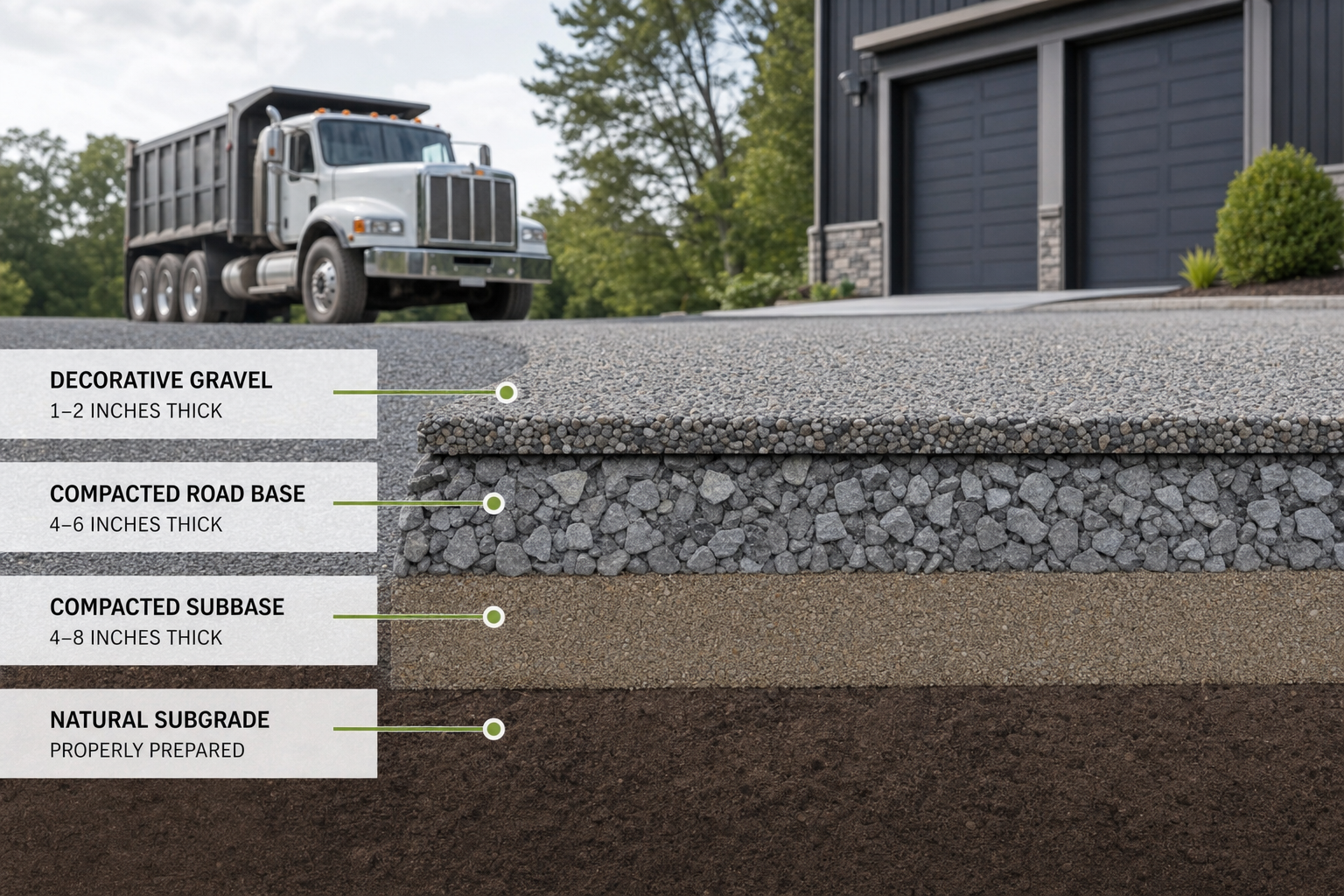
If your property sits in a low area or you’ve noticed water pooling during storms, drainage becomes a critical concern. In these situations, you might need to install a drainage layer beneath your driveway. We often recommend a bottom layer of larger drainage rock or crushed concrete, followed by compacted road base on top. The drainage layer allows water to escape laterally rather than saturating the subgrade. The road base layer above provides the stable driving surface. This two-layer approach gives you both drainage and stability—something gravel alone cannot accomplish.
Comparing Cost and Maintenance: Road Base vs. Gravel
Price matters in any construction project, but it’s important to look at total cost of ownership rather than just the initial material price. Road base and gravel have different upfront costs, and they also have very different maintenance requirements over the life of the driveway.
Initial Material and Delivery Costs
Road base and gravel typically cost about the same per ton, though prices vary based on material type, delivery distance, and current market conditions. The real difference comes down to how much material you need and what additional work is required. For a typical residential driveway in San Antonio or New Braunfels, you’ll need 4 to 6 inches of compacted road base to achieve a stable surface. That translates to roughly 100 to 150 tons of material for an average two-car driveway. With gravel, you might use slightly less material, but you’ll likely need to refresh and add more gravel within a year or two as it spreads and migrates. When we talk with homeowners about cost-effectiveness, we always point out that the cheaper option today might cost more in the long run if it requires frequent replenishment.
Maintenance Requirements
Road base requires minimal maintenance once installed and compacted. You might need to add a thin top layer every five to ten years to refresh the surface, but that’s typically the extent of it. Gravel, on the other hand, requires ongoing maintenance. You’ll need to rake it back into place, fill bare spots, add new material as it gets pushed to the edges, and potentially regrade the surface every year. If you’re maintaining a long ranch driveway in Floresville or Seguin, that ongoing maintenance adds up quickly in both time and material costs.
Factor
Road Base
Gravel
Initial Cost per Ton
$$ (similar)
$$ (similar)
Installation Complexity
Requires compaction equipment
Simple spread and rake
Annual Maintenance
Minimal to none
Frequent raking and replenishment
Lifespan Before Major Refresh
5–10 years
1–2 years
Total Cost Over 10 Years
Lower (one installation)
Higher (multiple additions)
The Value of Professional Delivery and Installation
Proper installation matters as much as material choice. We’ve seen plenty of driveways fail not because the homeowner chose the wrong material, but because the base wasn’t prepared correctly or the material wasn’t compacted properly. When we deliver road base to a project, we always discuss site preparation with the customer. You need to remove organic material, grade for proper drainage, and ensure the subgrade is stable before the road base goes down. If you’re working with a contractor, make sure they understand compaction requirements. If you’re doing the work yourself, plan to rent a plate compactor or small roller. The compaction step is what transforms road base from loose aggregate into a stable driveway surface.
When to Use Decorative Gravel Over Compacted Road Base
We don’t want to give the impression that gravel has no place in driveway and landscaping projects. There are definitely situations where gravel is the better choice, and we deliver plenty of decorative gravel to homes and commercial properties throughout Central Texas. The key is understanding when and where gravel makes sense.
Low-Traffic Pathways and Decorative Borders
If you’re building a walking path, garden border, or decorative accent around your home, gravel is an excellent choice. It provides visual interest, comes in various colors and sizes, and allows water to drain freely around plants and landscaping. River rock, crushed granite, and decomposed granite all work well in these applications. The material doesn’t need to support vehicle weight, so the lack of compaction isn’t a problem. We deliver landscape rock and decorative gravel to projects in Boerne and Bulverde regularly for exactly these kinds of applications.
Combination Approach: Road Base Foundation with Gravel Finish
One popular approach combines the best of both materials. You install a compacted road base foundation for structural stability, then add a thin layer of decorative gravel on top for appearance. This gives you a stable driveway that won’t rut or wash out, plus the aesthetic appeal of clean gravel. The road base does all the structural work, and the gravel provides the finished look. Just keep in mind that you’ll need to refresh the gravel layer periodically as vehicles push it around, but the underlying road base prevents the kind of major problems you’d see with gravel alone.
Temporary Access Roads and Staging Areas
During construction projects, contractors sometimes need temporary access roads or staging areas that will later be removed or reconfigured. In these cases, gravel can make sense because it’s easier to remove than compacted road base. However, if the temporary road will see heavy truck traffic or needs to last through a rainy season, we usually still recommend road base. The improved stability is worth the extra effort of removal later.
Making the Right Choice for Your Central Texas Driveway
After working with hundreds of driveway projects across San Antonio, New Braunfels, San Marcos, Boerne, Bulverde, Seguin, and Floresville, we’ve developed a clear perspective on when to recommend road base versus gravel. For the vast majority of residential and commercial driveways that will see regular vehicle traffic, road base is the better choice. It provides superior stability, requires less maintenance, and performs better in our local soil and climate conditions. The San Antonio/New Braunfels metro area has seen a 15% increase in residential development since 2020, driving high demand for aggregate logistics, and most of that demand is for road base precisely because it delivers long-term value.
Schedule Delivery in Minutes
Get Your Free Quote Today
Tell us your location, access, and estimated yardage — we’ll handle the rest
Gravel has its place in landscaping, decorative applications, and specialized drainage situations, but it’s rarely the best choice for a primary driveway surface. If you’re unsure which material is right for your specific project, give us a call. We’ll discuss your site conditions, drainage situation, traffic expectations, and budget to help you make an informed decision. We can also explain the different types of road base we carry and recommend the right gradation for your application.
Get a Free Quote on Road Base or Gravel Delivery
We deliver road base, gravel, and all types of construction aggregates throughout Central Texas. Whether you’re building a new driveway, repairing an existing surface, or working on a larger commercial project, we have the materials and hauling capacity to support your work. Our team understands local soil conditions, drainage requirements, and the specific challenges of Hill Country construction. We’ll help you calculate the right quantity of material, schedule delivery when you need it, and answer any questions about installation and compaction.
Phone
[CONTACT INFO]
Email
[CONTACT INFO]
Service Area
[CONTACT INFO]
Website
[CONTACT INFO]
Request a quote today and let’s discuss your driveway material needs. We’re here to help you choose the right aggregate, deliver it on time, and support your project from start to finish.
Frequently Asked Questions
Can I install road base without compacting it?
You can spread road base without compacting it, but you won’t get the stability and performance that makes road base worthwhile. The whole point of road base is that it compacts into a solid, stable surface. Without compaction, it will behave more like loose gravel and won’t provide the structural benefits you’re paying for. If you’re installing road base for a driveway, plan to rent or hire compaction equipment. A plate compactor works for most residential driveways. Larger projects might need a small roller. The compaction step is what transforms loose aggregate into a durable driving surface.
How thick should road base be for a residential driveway?
For most residential driveways in Central Texas, we recommend 4 to 6 inches of compacted road base. If you’re dealing with poor soil conditions, heavy vehicles, or a long driveway that will see frequent use, you might want to go up to 6 or even 8 inches. The material compacts down significantly during installation, so if you want 4 inches of finished compacted depth, you’ll typically need to start with 5 to 6 inches of loose material. We can help you calculate the right amount based on your specific driveway dimensions and soil conditions.
Will road base work in areas with heavy rainfall?
Yes, road base performs well in areas with heavy rainfall. The compacted surface sheds water rather than absorbing it, and properly graded road base allows runoff to flow to the sides of the driveway rather than pooling on the surface. That said, drainage design matters. Make sure your driveway is crowned or graded so water doesn’t sit on the surface. In areas with particularly heavy drainage, you might want to install a layer of drainage rock beneath the road base to channel water away from the subgrade. We work with customers throughout San Marcos, Seguin, and New Braunfels—all areas that see significant rainfall—and properly installed road base handles the weather without problems.
Is gravel cheaper than road base in the long run?
No, gravel is typically more expensive over time even though the initial cost per ton might be similar. The problem with gravel is that it requires constant maintenance. You’ll need to rake it back into place, add new material as it spreads, and potentially regrade the surface every year or two. Over a ten-year period, you’ll spend more on gravel replenishment and labor than you would on a single road base installation. Road base, once properly installed and compacted, requires minimal maintenance and can last five to ten years before you need to add a refresh layer. When we talk with homeowners about cost-effectiveness, we always emphasize total cost of ownership rather than just the upfront price.
Can I drive on road base immediately after installation?
You can drive on compacted road base relatively quickly, usually within a day of installation. The material is stable as soon as it’s compacted. That said, we recommend giving it at least 24 hours to settle, especially if the weather is hot and dry. If you’ve installed road base in layers (which is best practice for thicker installations), make sure each layer is fully compacted before adding the next. Some contractors prefer to lightly water the road base before compacting to help the fines bind together, which can improve stability. If you do this, let the surface dry for a few hours before driving on it. Heavy traffic immediately after installation can create ruts before the material has fully stabilized.
Do I need a professional to install road base, or can I do it myself?
Road base installation is within reach for most homeowners with basic DIY skills, but it does require some planning and the right equipment. The main challenge is compaction. You’ll need to rent a plate compactor or roller, and you’ll need to understand proper compaction technique. Beyond that, you need to prepare the subgrade correctly—remove organic material, establish proper drainage slope, and create a stable base before the road base goes down. If you’re comfortable with that level of site work, you can handle the installation yourself. If you’re not sure or if the driveway is large or complex, hiring a professional makes sense. We deliver materials to both DIY customers and professional contractors throughout Central Texas, and we’re happy to discuss installation requirements when you order.
What’s the difference between #2 road base, 3/4″ road base, and flexible base?
These are different gradations of road base with slightly different stone sizes and uses. #2 road base contains stones up to about 2 inches in diameter mixed with fines. It’s a workhorse material that works well for most driveways and access roads. 3/4″ road base has smaller maximum stone size (3/4 inch), which makes it easier to compact and creates a smoother finished surface. It’s popular for residential driveways where you want a more refined appearance. Flexible base is an engineered blend designed to meet specific specifications for roadway construction. All three types compact well and provide stability, but #2 and 3/4″ road base are the most common choices for residential and light commercial driveways. We carry all three types and can recommend the right one based on your project requirements.
Fill Dirt · Gravel · Road Base · Sand · Topsoil · Asphalt Millings
Need Materials Delivered in San Antonio?
Call O’Leary Development Group for a fast quote on fill dirt, gravel, road base, sand, topsoil, or asphalt millings delivered in San Antonio.